Florida’s Statute of Limitations for Property Damage Claims: What Homeowners Need to Know

When your home is damaged by a hurricane, storm, water leak, fire, or another unexpected event, filing a property damage claim can feel overwhelming. Between repairs, insurance adjusters, and paperwork, many Florida homeowners delay taking action—sometimes without realizing there are strict deadlines that can permanently affect their rights.

At Tarrash Law, we help Florida homeowners navigate property damage claims and insurance disputes. One of the most important issues homeowners often overlook is the statute of limitations.


What Is a Statute of Limitations?

A statute of limitations is a law that sets a deadline for filing a legal claim. If you miss this deadline, you may lose your right to recover compensation—no matter how strong your case may be.

In Florida, the statute of limitations for property damage claims depends on the type of claim, the date of the incident, and whether an insurance policy is involved. Because these deadlines can vary, acting promptly is critical.


Florida Property Damage Statute of Limitations: Key Timeframes

Florida law provides different deadlines depending on the type of claim:

  • Negligence (Accidents/Damage): 2 years for incidents occurring on or after March 24, 2023
  • General or Intentional Damage: 4 years
  • Insurance Breach of Contract: 5 years
  • Hurricane or Windstorm Claims: 1 year from the date of loss

Understanding which timeframe applies to your situation is crucial to protecting your legal rights and ensuring your claim is not barred by Florida law.


Why Waiting Can Hurt Your Property Damage Claim

Even if the statute of limitations has not expired, waiting too long can seriously weaken your claim. Delays may result in:

  • Insurance companies disputing the cause of the damage
  • Loss or deterioration of physical evidence
  • Difficulty proving the extent of damage
  • Missed policy deadlines or reporting requirements
  • Denied or underpaid claims

Insurance companies often scrutinize delayed claims more aggressively, making timely action essential.


When Does the Statute of Limitations Begin?

In most Florida property damage cases, the statute of limitations begins on the date the damage occurred. However, some types of damage—such as water intrusion, roof leaks, or mold—may not be immediately visible. In these situations, the deadline may start when the damage was discovered or reasonably should have been discovered. Determining the correct start date can be complex and is often disputed by insurers.


Special Considerations for Hurricane and Storm Damage Claims

Hurricane and storm damage claims are common in Florida and often involve:

  • Wind damage
  • Roof failure
  • Water intrusion
  • Structural damage

Hurricane-related claims are particularly time-sensitive because Florida law limits filing to 1 year from the date of loss. Insurance policies may also contain additional reporting requirements, so homeowners should act quickly after a storm.


How an Attorney Can Help Protect Your Rights

Property damage claims are legal matters governed by strict deadlines and detailed insurance policy language.

An experienced Florida property damage attorney can help by:

  • Reviewing your insurance policy for critical deadlines
  • Determining the applicable statute of limitations
  • Preserving evidence and documenting damages
  • Challenging delayed, denied, or underpaid claims
  • Filing a lawsuit when necessary to protect your rights

At Tarrash Law, we focus on helping Florida homeowners hold insurance companies accountable and pursue the compensation they deserve.


Don’t Miss Your Deadline

If your home has been damaged, waiting too long can cost you your claim. Even if the damage occurred months—or even years—ago, you may still have legal options, but time is not on your side.

Understanding Florida’s statute of limitations for property damage claims is essential to protecting your home and your financial future.


Final Takeaway

Florida law places strict time limits on property damage claims. While the exact deadline depends on the type of claim and the circumstances involved, delaying action can result in denied coverage or lost legal rights.

If you are a Florida homeowner dealing with property damage or an insurance dispute, speaking with an experienced attorney as soon as possible can help ensure you do not miss an important deadline. Contact UsContact Tarrash Law today for a free claim review!
Understanding Florida Elder Abuse Laws: How and When to Report Concerns

Elder abuse is a serious and growing problem affecting seniors and vulnerable adults across Florida. State laws are designed to protect older adults from harm, but these protections only work when suspected abuse or neglect is reported promptly.

This guide explains what qualifies as elder abuse under Florida law, when reporting is required, how to make a report, and what happens after authorities are notified.


What Is Elder Abuse Under Florida Law?

Florida law defines a vulnerable adult as a person age 18 or older whose ability to perform daily activities or care for themselves is impaired due to aging, disability, illness, or mental condition.

Elder abuse can take many forms, including:

  • Physical Abuse: Hitting, pushing, restraining, or causing physical harm
  • Emotional or Psychological Abuse: Verbal threats, intimidation, humiliation, isolation, or harassment
  • Neglect: Failing to provide adequate food, medical care, supervision, hygiene, or shelter
  • Financial Exploitation: Misuse or theft of money, property, assets, or benefits
  • Sexual Abuse: Any non-consensual sexual contact or exploitation
  • Self-Neglect: When an elder cannot meet their own basic needs and is at risk of harm

Florida law encourages all individuals—not just professionals—to report suspected elder abuse or neglect.


When Should Elder Abuse Be Reported in Florida?

You do not need proof to report elder abuse. If you have a reasonable suspicion that abuse or neglect may be occurring, it should be reported.

Warning signs may include:

  • Unexplained bruises, burns, fractures, or injuries
  • Sudden changes in behavior, mood, or personality
  • Fearfulness, withdrawal, or anxiety around caregivers
  • Poor hygiene, malnutrition, dehydration, or untreated medical conditions
  • Unsafe or unsanitary living conditions
  • Missing money, suspicious financial activity, or sudden legal changes

Florida law protects individuals who report suspected abuse in good faith, even if the investigation later determines no abuse occurred.


How to Report Elder Abuse in Florida

Florida provides multiple ways to report suspected elder abuse, depending on the urgency of the situation.

Emergency Situations

If an elderly person is in immediate danger, call 911.

Non-Emergency Reports

Suspected abuse or neglect can be reported through the Florida Abuse Hotline, which operates 24 hours a day. Reports may be made anonymously.

Helpful information includes:

  • The elder’s name, age, and location
  • A description of what you observed or suspect
  • Information about caregivers or suspected abusers
  • Any immediate safety concerns
  • The elder’s physical or mental condition

What Happens After an Elder Abuse Report Is Filed?

After a report is submitted, Adult Protective Services (APS) reviews the information and determines whether an investigation is necessary.

The process may include:

  1. Assessing whether the individual qualifies as a vulnerable adult
  2. Conducting an in-person welfare check
  3. Interviewing the elder, caregivers, and witnesses
  4. Reviewing medical, financial, or facility records

If abuse or neglect is confirmed, authorities may implement protective services, involve law enforcement, or pursue legal action.


When Legal Help May Be Needed

Reporting elder abuse is a critical first step, but it may not be enough to fully protect the victim or hold the responsible parties accountable.

Legal assistance may be necessary when:

  • A nursing home or assisted living facility fails to provide proper care
  • Abuse or neglect results in serious injury, illness, or death
  • Financial exploitation has occurred
  • A facility attempts to hide abuse or shift blame
  • Insurance companies or facilities deny responsibility

An experienced elder abuse attorney can investigate the circumstances, gather evidence, work with medical and care experts, and pursue compensation for the victim and their family.


Final Thoughts

Elder abuse and neglect are serious violations of trust and dignity. Florida law provides protections for vulnerable adults, but those protections rely on timely reporting and appropriate legal action when necessary.

If you believe an elderly loved one has been abused, neglected, or exploited—especially in a nursing home or assisted living facility—seeking legal guidance can help protect their rights and prevent further harm. Contact Tarrash Law today for a free case review 954-666-5881

Hurricane Insurance vs. Flood Insurance: A Guide for Florida Homeowners

Florida homeowners face unique insurance challenges during hurricane season. Each year, storms cause billions of dollars in property damage — and many homeowners discover too late that their insurance does not cover everything they expected.One of the most common and costly misunderstandings is believing that hurricane insurance and flood insurance are the same.

They are not.

If you own a home in Florida, understanding the difference between hurricane insurance and flood insurance is critical to protecting your property and finances.


Is Hurricane Insurance the Same as Flood Insurance in Florida?

No. Hurricane insurance and flood insurance are two completely different types of coverage.

In Florida:

  • Hurricane insurance typically covers wind damage
  • Flood insurance covers damage caused by rising water

Most standard homeowners insurance policies include windstorm coverage, but flood damage is excluded unless you purchase a separate flood insurance policy.


What Does Hurricane Insurance Cover for Florida Homeowners?

Hurricane insurance in Florida generally refers to the windstorm portion of a homeowners insurance policy.

This coverage often applies to damage caused by:

  • Hurricane-force winds
  • Roof damage or collapse
  • Broken windows and doors
  • Structural damage
  • Rain entering through wind-damaged openings

Florida insurers usually include windstorm coverage unless a homeowner signs a written waiver.


Understanding Hurricane Deductibles in Florida

Florida homeowners insurance policies often include a separate hurricane deductible, which can be significantly higher than a standard deductible.

Important details Florida homeowners should understand:

  • Hurricane deductibles are often 1%–5% of the home’s insured value
  • The deductible applies once a hurricane is officially declared
  • A higher deductible means more out-of-pocket costs after a storm

For example, a 3% deductible on a $500,000 home equals $15,000 before insurance coverage begins.


Flood Insurance in Florida: What It Covers

Flood insurance is not included in homeowners or hurricane insurance policies.

Flood insurance may cover damage caused by:

  • Storm surge
  • Heavy rainfall
  • Rising groundwater
  • Overflowing canals, lakes, or drainage systems

Florida homeowners can purchase flood insurance through the National Flood Insurance Program (NFIP) or private flood insurance carriers.

Coverage limits, exclusions, and depreciation rules vary by policy.


Why Wind vs. Flood Damage Matters in Florida Insurance Claims

After a hurricane, insurance companies carefully investigate whether damage was caused by wind or flooding.

This distinction is critical because:

  • Wind damage may be covered under homeowners insurance
  • Flood damage requires a separate flood policy
  • Misclassification can result in denied or underpaid claims

Disputes often arise when insurers attribute damage to flooding rather than wind.


Do Florida Homeowners Need Flood Insurance?

Many Florida homeowners believe flood insurance is only necessary in high-risk flood zones. In reality:

  • Flooding can occur outside designated flood zones
  • Hurricanes often cause flooding from rainfall, not just storm surge
  • Even moderate flooding can cause severe structural damage

For many Florida homeowners, flood insurance provides essential financial protection.


Steps Florida Homeowners Should Take Before Hurricane Season

To reduce risk and avoid coverage gaps, Florida homeowners should:

  • Review their homeowners insurance policy annually
  • Confirm windstorm coverage is included
  • Understand their hurricane deductible
  • Purchase flood insurance if not already covered
  • Document property condition and valuables

Being proactive before hurricane season can make a significant difference after a storm.


When Insurance Disputes Arise

After major hurricanes, homeowners frequently experience:

  • Claim denials
  • Delayed payments
  • Underestimated damage
  • Disputes over wind vs. flood classification

Legal guidance may be necessary to ensure insurance companies honor policy obligations.


Key Takeaway for Florida Homeowners

Hurricane insurance and flood insurance are not the same in Florida.

To be fully protected, many Florida homeowners need both windstorm coverage and flood insurance. Understanding your policy now can help prevent serious financial hardship after a hurricane. If you need legal guidance regarding your property damage claim contact Tarrash Law 24/7!

Will My Insurance Cover a Roof Leak in Florida?

That sinking feeling you get when you see a water stain blooming on your ceiling is always followed by one question: will my insurance cover a roof leak?

The short answer is, it all comes down to why the roof is leaking. If a sudden, unexpected event is the culprit—like a storm or a falling tree—you're probably in good shape. But if the leak is the result of simple old age or a lack of maintenance, you'll likely be paying for the repairs out of your own pocket.

Decoding Your Homeowners Policy for Roof Leaks

It’s easy to think of your insurance policy as a catch-all warranty for your home, but that's not quite right. A better way to see it is as a financial shield against sudden, accidental disasters. The entire decision of whether your roof leak claim gets paid hinges on one core concept: the difference between a "covered peril" and a maintenance issue.

Insurance carriers are in the business of covering damage from abrupt events you couldn't have prevented. They aren't, however, on the hook for problems that crop up over time because a homeowner didn't perform regular upkeep. This distinction is everything.

The Critical Difference: Sudden Damage vs. Gradual Wear

Getting a handle on this concept is the key to understanding your claim. The cause of the leak truly dictates the outcome.

  • Sudden and Accidental Damage (Often Covered): This is for things that happen out of the blue and cause immediate problems. Think of a heavy windstorm tearing shingles off your roof, or a healthy tree branch crashing down and punching a hole right through it. Hail damage is another classic example.
  • Gradual Wear and Tear (Often Excluded): This covers the slow, inevitable decline of your roof over the years. We're talking about shingles that have become old, brittle, and cracked from years of sun exposure, or flashing around a chimney that has slowly degraded, finally letting a small drip turn into a real problem.

Will Insurance Cover a Roof Leak in Florida?

To help you visualize this, here's a quick reference guide for some common scenarios.

Quick Guide: Roof Leak Coverage Scenarios

Cause of Leak Generally Covered? Key Factor
Windstorm or Hail Damage Yes A sudden, named peril caused the damage.
Falling Tree or Debris Yes An external, accidental event is the clear cause.
Old, Worn-Out Shingles No This is considered a maintenance issue, not a sudden event.
Ice Dams Often The resulting water damage is usually covered, but not the dam removal itself.
Poor Installation/Workmanship No This falls on the contractor, not your insurance policy.
Roof Nearing End of Lifespan No Gradual deterioration is an expected cost of homeownership.

This table simplifies it, but the principle is clear. An insurance adjuster is trained to look for that clear line between an accident and neglect.

For example, the water damage to your drywall and floors from a storm-damaged roof is almost always covered. But if that exact same interior damage came from a slow leak you’ve known about for three years but never fixed, the insurer will almost certainly deny the claim on the grounds of negligence. Your job is to maintain the roof; their job is to protect you from the unexpected. Figuring out which category your situation falls into is the first and most important step.

Covered Perils vs. Exclusions: The Deciding Factor

When it comes to a roof leak claim, everything hinges on one critical question: what caused the leak? Your insurance policy is built around this very distinction, separating problems it will pay for (covered perils) from those it won't (exclusions).

Getting this right from the start is the most important part of the entire claims process.

Think of a "covered peril" as a specific, named disaster your insurance company has agreed to protect you from. These are the sudden, accidental events that are completely out of your control. For any Florida homeowner, understanding this list is non-negotiable.

What Is a Covered Peril?

These are the heroes in your insurance story—the events that trigger your coverage and get your checkbook opened for repairs. While every policy has its own unique language, most standard homeowner policies will cover damage from things like:

  • Wind and Hail: This is the big one for us in Florida, especially during hurricane season. A classic example is wind lifting shingles or a hailstorm pockmarking your roof, creating an entry point for water.
  • Falling Objects: If a storm sends a healthy tree branch (or the whole tree) crashing through your roof, the leak that follows is almost always covered.
  • Fire and Lightning: It’s pretty straightforward—if a fire or lightning strike damages your roof and causes a leak, that's a clear-cut covered peril.
  • Sudden Water Discharge: This one is a bit different. Imagine a pipe bursting in your attic. If that sudden event causes immediate water damage that results in a leak, it’s often covered.

The common thread here is that the cause was abrupt, unexpected, and accidental. You need to show that the leak is a direct result of one of these specific events.

What Are Policy Exclusions?

Now for the other side of the coin: exclusions. These are the specific circumstances your policy explicitly states it will not cover. Insurers view these as issues that fall under the homeowner's responsibility to manage.

The single biggest exclusion you’ll encounter with roof leaks is wear and tear. Your insurance policy is not a home maintenance plan. If your roof starts leaking simply because it’s 20 years old and the materials have broken down, your claim will be denied.

Other common exclusions to watch out for include:

  • Gradual Deterioration: Think of shingles that have become brittle and cracked after two decades of baking in the Florida sun.
  • Lack of Maintenance: If you knew about a few missing shingles for months but never fixed them, and a simple rainstorm causes a major leak, the insurer will likely point to neglect.
  • Faulty Workmanship: A leak caused by a roofer who installed the flashing incorrectly five years ago isn't a covered peril; it's a construction issue.
  • Pest Damage: Leaks that start because termites, squirrels, or other critters have chewed through your roof are typically not covered.

Key Takeaway: When an adjuster visits your home, their main goal is to figure out if the leak was caused by a sudden, covered event or a gradual, excluded issue. Your entire claim depends on your ability to prove it was the former.

To make this concept perfectly clear, here's a quick breakdown of how insurers see different scenarios.

Roof Leak Coverage Cause vs Exclusion

This table compares common causes of roof leaks and shows why one might be covered while another is denied.

Cause of Leak Typically Covered? Why or Why Not?
Hail-Damaged Shingles Yes The damage was caused by a sudden, specific weather event (a covered peril). The dents and cracks are direct evidence of this event.
Sun-Cracked Shingles No The damage occurred gradually over many years due to normal sun exposure. This is considered wear and tear (an exclusion).
Wind-Driven Rain Damage Yes A powerful storm forces water under shingles, causing a leak. The storm is the covered peril. You can learn more about how wind-driven rain roof damage is handled in claims.
Faulty Flashing No The leak is due to improper installation or degraded sealant, which is a maintenance or workmanship issue (an exclusion).

Grasping this fundamental difference is your best tool. It prepares you for that first call with the insurance company, helps you gather the right kind of proof, and allows you to quickly spot whether a denial is based on solid policy language or just a questionable judgment call.

How to Read Your Insurance Policy for Roof Coverage

Let's be honest—your insurance policy probably looks like a dense legal document you'd rather use as a doorstop. It's filled with confusing clauses and industry jargon. But knowing how to decipher just a few key sections can make all the difference, turning you from a confused homeowner into someone who knows their rights.

The absolute best time to figure out what your policy says is before a storm hits. When you open up your policy, don't get lost in the weeds. You're hunting for two little acronyms that carry a massive financial punch: RCV and ACV.

Replacement Cost Value vs. Actual Cash Value

These two terms dictate how your insurance company will pay for a new roof, and the difference can easily be tens of thousands of dollars.

  • Replacement Cost Value (RCV): This is the one you want. Think of it as "new for old." RCV coverage pays the full cost to replace your damaged roof with brand-new materials of similar quality. It doesn't matter how old your roof was; you get what it costs to make it whole again.
  • Actual Cash Value (ACV): This is essentially the Kelley Blue Book value of your roof. An ACV policy pays you for what your roof was worth the moment before it was damaged. The insurer starts with the replacement cost, then subtracts a hefty amount for depreciation based on its age and condition.

Here’s a real-world example: A roof with a 25-year lifespan that’s already 15 years old has lost 60% of its value. If a full replacement costs $20,000, an RCV policy would cover that entire amount (minus your deductible, of course). But an ACV policy? It might only pay out $8,000, leaving you on the hook for the remaining $12,000. This is easily the most important financial detail in your policy.

In South Florida, where hurricane season is a way of life, this distinction is everything. Firms like Tarrash & Tarrash in Boca Raton have recovered over $15 million for clients by challenging insurers like State Farm and Citizens on these very terms. They know that a policy's fine print—whether it's an RCV clause that secures $15,000 for a full replacement, or an ACV clause that only gets you $6,000-$8,000—determines a family's ability to recover. You can see how often these issues come up by looking at water damage insurance claims statistics.

Open Perils vs. Named Perils

Once you know how you'll be paid (RCV vs. ACV), you need to figure out what kinds of damage are even covered in the first place. This comes down to whether you have an "Open Perils" or "Named Perils" policy.

Think of it as two completely different rulebooks for the same game.

  1. Open Perils Policy (sometimes called "All-Risk"): This is the good stuff. It’s the most comprehensive and homeowner-friendly option because it covers damage from all causes... unless it's specifically listed in the exclusions section. With this policy, the burden of proof is on the insurance company to prove the damage was caused by something they excluded.
  2. Named Perils Policy: This one is much more restrictive. It only covers damage from the specific causes, or "perils," that are explicitly listed in the policy—things like fire, lightning, windstorm, and hail. If the cause of your roof leak isn't on that list, you're out of luck. The burden of proof is on you to show that a covered event caused the damage.

Finding this language is critical. Scan for sections with titles like "Covered Causes of Loss," "Perils Insured Against," or "Exclusions." Knowing whether you have to prove what is covered or the insurer has to prove what isn't gives you a huge strategic advantage right from the start.

A Step-by-Step Guide to Filing Your Roof Leak Claim

Discovering a roof leak is a chaotic and stressful moment. But what you do in the hours and days that follow is absolutely critical. Following a clear, strategic plan can be the difference between getting your claim fully paid and facing a frustrating denial.

Think of this less like a panic drill and more like building a solid case. Your goal is to give the insurance company undeniable proof that your loss is covered.

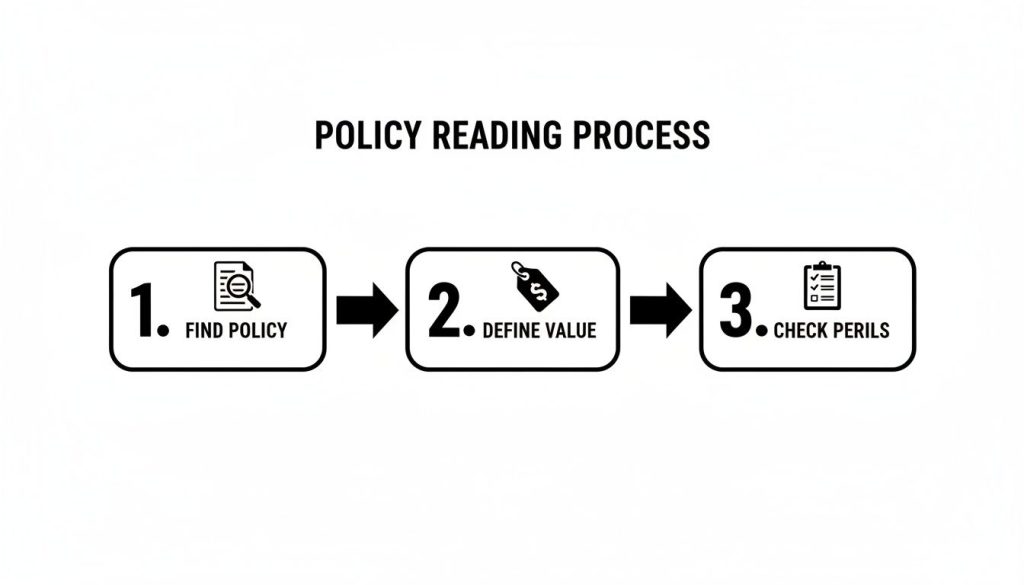
This simple flowchart breaks down the very first steps to figuring out what your policy actually says.

will-insurance-cover-a-roof-leak-policy-process

This process highlights the three key things you need to do: get your hands on the policy, figure out if you have RCV or ACV coverage, and confirm which "perils" are actually covered.

Step 1: Immediately Stop the Bleeding (Mitigate Damage)

Before you even think about calling your insurance company, your first job—both legally and practically—is to prevent the problem from spiraling out of control. This is what the industry calls your duty to mitigate. Insurers expect you to act like any reasonable person would to protect your property from further harm.

If you don't, they have a legitimate reason to deny paying for any damage that happened after the initial leak.

  • Temporary Fixes: This doesn't mean doing a full repair. It means putting a tarp over the damaged roof section, moving furniture and heirlooms out from under the leak, or setting out buckets to catch the water.
  • Safety First: If water is getting anywhere near electrical outlets or fixtures, go straight to your breaker box and shut off the power to that part of the house.

Step 2: Document Everything Before Touching a Thing

Your smartphone is your best friend right now. Before anything is moved, cleaned, or repaired, you need to create a detailed visual record. This evidence is what will prove the extent of your loss and, just as importantly, link it directly to a covered event like a storm.

Crucial Tip: You need to document both the cause and the effect. Get clear photos of the damaged shingles or the hole in the roof from the outside (only if it's safe!), and then go inside and thoroughly document the water stains, saturated drywall, and ruined belongings. This creates a clear, compelling story for the adjuster.

Your documentation should include:

  1. Videos: A slow, narrated walk-through is incredibly powerful. You can capture the scope of the damage and even the sound of dripping water.
  2. Photos: Take wide shots to give context to the room, then zoom in for close-ups of specific damage like buckled floorboards or peeling paint.
  3. A Detailed Log: Grab a notebook and start a journal. Write down the date and time you found the leak, what the weather was like, and every single action you take from that moment on.

Step 3: Notify Your Insurance Company Promptly

Once the property is secure and you’ve documented the scene, it’s time to call your insurer. When you make that first report, choose your words carefully. Stick to the facts you know and have documented.

  • What to Say: "I'm calling to report new property damage from the storm on [Date]. My roof is actively leaking, and I have water damage inside my home."
  • What to Avoid: Do not guess or speculate about the cause. Saying things like, "My roof has looked old for a while," or "I think it might be wear and tear" can be used against you to justify a denial.

This call officially starts the claims process and you'll be assigned a claim number and an adjuster. At this stage, you will also likely need to prepare a formal Sworn Statement in Proof of Loss. This is a signed, legal declaration of the facts and finances of your claim, and getting it right is non-negotiable.

To learn more, you can explore the requirements for a Sworn Statement in Proof of Loss in our guide.

Why Insurers Deny or Underpay Roof Leak Claims

After a storm damages your roof, you’d hope your insurance company would step up and be a true partner in your recovery. While many adjusters handle claims professionally, it's critical to remember that insurance is a business. At the end of the day, their primary responsibility is to their shareholders, which often means paying out as little as possible on claims.

Understanding the common reasons and tactics insurers use to deny or short-change a claim is your best defense. When you know what arguments to expect, you can build a rock-solid case from the very beginning.

Common Excuses for Denying a Claim

Insurance companies have a well-worn playbook for denying roof leak claims, especially in the chaotic aftermath of a major storm. The core strategy is often the same: shift the blame from a covered event, like a hurricane, back onto you, the homeowner.

Here are a few of the most frequent arguments you might hear:

  • Pre-Existing Damage: The adjuster walks your roof and points to a few old, weathered shingles. Their argument? Your roof was already in bad shape before the storm, so the leak was bound to happen anyway. They'll try to frame the wind and rain as a minor factor rather than the direct cause.
  • Faulty Installation or Workmanship: This is a classic move. The insurer might claim that the company who installed your roof a decade ago did a shoddy job. By blaming poor workmanship, they sidestep their responsibility, suggesting the roofer—not your policy—should cover the damage.
  • Lack of Maintenance: If they find clogged gutters or see that you haven't addressed a minor, unrelated issue, they'll pounce. They will argue that your failure to perform routine upkeep is the real reason your roof failed, not the 100 mph winds.

The Red Flag: A denial letter isn't the final word; it's just the opening move in a negotiation. Insurers are banking on you giving up after the initial "no." It's your right to challenge their findings with your own evidence.

This is where your documentation becomes invaluable. Before-and-after photos, records of regular maintenance, and a report from an independent roofer can completely dismantle these common excuses.

Sneaky Ways Insurers Underpay Your Claim

Sometimes, an insurer won’t issue a flat-out denial. Instead, they’ll approve the claim but make a settlement offer so low it doesn’t come close to covering the actual repair costs. An underpayment can be just as devastating as a denial.

One of the biggest culprits behind underpayment is the Actual Cash Value (ACV) policy. Some carriers push these policies hard because they allow for massive deductions based on your roof's age and wear-and-tear (depreciation). This practice is widespread, and its impact is staggering.

Water and roof damage claims are a major financial pain point for homeowners. The data below shows just how common and costly these issues can be, which is why insurers look for every opportunity to reduce their payouts.

Key Statistics on Water and Roof Damage Claims

This table highlights the frequency and financial impact of water-related property damage claims for homeowners.

Statistic Figure Source Insight
Homes Filing Water Damage Claims Annually 1 in 60 This shows how common these incidents are, making them a significant area of focus for insurer cost-cutting.
Average Claim for Water Damage $12,514 A substantial cost that insurers aim to minimize through depreciation and other tactics.
Potential Roof Depreciation 50% or more A 15-year-old roof needing a $15,000 replacement could be depreciated to a payout of only $6,000 to $8,000.

Sources: This Old House and industry reports.

These numbers reveal the financial stakes. A lowball offer based on depreciation can leave a homeowner thousands of dollars short, turning a covered repair into a major out-of-pocket expense.

Beyond depreciation, keep an eye out for these other underpayment games:

  • The "Patch Job" Offer: Your trusted roofer tells you the whole roof needs replacing to maintain its integrity. The insurer, however, only agrees to pay for a small patch, leaving you with mismatched shingles and a ticking time bomb for the next leak.
  • Ignoring Local Building Codes: Many local ordinances require you to bring the entire roof plane up to current code if more than 25% is damaged. An insurer might conveniently ignore this rule and only offer to pay for the damaged spot, sticking you with the bill for mandatory, expensive upgrades.
  • Using Unrealistic Pricing: The estimate you get from the insurance company might be built on outdated material costs or labor rates so low that no reputable local contractor would even consider the job. This creates a huge gap between their offer and the real-world bids you receive.

Recognizing these tactics is the first step toward fighting back. The best thing you can do is get multiple, detailed estimates from licensed local roofers to establish the true cost of getting the job done right. This independent proof is your most powerful weapon for challenging an unfair settlement and demanding the full amount you're owed.

What to Do When Your Roof Leak Claim Is Denied

That denial letter from your insurance company can feel like a punch to the gut. It’s easy to read it and think, "Well, that's that." But I'm here to tell you that a denial is rarely the final word on the matter.

Think of it as the insurance company's opening bid in a negotiation. They are banking on the hope that you'll feel overwhelmed, frustrated, and simply walk away. Don't fall for it. If your claim was denied after a major hurricane or the settlement they offered wouldn't even cover the materials for a repair, it’s a clear signal that you need to stand your ground.

will-insurance-cover-a-roof-leak-legal-help

When to Seek Professional Help

So, how do you know when it’s time to stop arguing with the adjuster and bring in a professional? There are some classic red flags that tell you it’s time to escalate. You should seriously consider getting expert help if:

  • The insurer claims "wear and tear" without even doing a proper inspection, using it as a convenient catch-all to deny what was obviously storm damage.
  • The settlement offer is a joke. You've gotten estimates from real contractors, and the insurer's offer won't cover even half the cost of the work.
  • Your claim gets shut down right after a hurricane, even when you have clear proof the storm is what caused your roof to leak.
  • They’re just dragging their feet. The insurance company has been stalling for months, leaving you with a leaky roof and no end in sight.

These aren't just frustrating delays; they're common tactics used to wear you down until you give up or accept a lowball offer. This is precisely the moment you need to level the playing field.

A denial letter isn't a dead end; it's a crossroads. Your next move determines whether you accept an unfair loss or fight for the full compensation needed to properly repair your home and protect your investment.

How an Attorney Can Challenge the Denial

When you hit one of these roadblocks, bringing in an experienced property damage attorney changes the entire game. A public adjuster can be great for assessing damage, but an attorney has the legal leverage to force the insurance company’s hand. It’s important to understand the difference between a public adjuster and a lawyer when you’re in this situation.

A good lawyer will dissect your policy, scrutinize the adjuster's report, and pick apart the denial letter to find the weak spots in their argument. They can reopen the claim, bring in their own network of engineers and roofing experts to provide compelling counter-evidence, and negotiate from a position of authority.

And if the insurance company still won't budge? Your attorney can file a lawsuit and hold them accountable in court for the policy you paid for. This is how you turn a frustrating dead end into a resolved claim and get the money you need to make your home whole again.

Answering Your Top Questions About Roof Leak Claims

Even when you know the basics of what insurance does and doesn't cover, the reality of filing a claim is stressful. Specific questions always pop up, and getting the right answers can be the difference between a paid claim and a costly denial.

Let's walk through some of the most common questions we hear from homeowners navigating this process.

How Long Do I Have to File a Roof Leak Claim in Florida?

This is a tricky one because there are really two deadlines you need to know. First, your policy language almost always requires you to give "prompt notice" of any damage. That doesn't mean filing the full claim, but it does mean letting them know something happened—and "prompt" can mean just a few days.

Then there's the state law. In Florida, you generally have a longer window to officially file your claim. But don't let that fool you into waiting. If you delay, the insurance company can easily argue that the damage got worse on your watch, giving them a reason to deny part or all of your claim. The best move is always to report the leak the moment you discover it. You can gather the details later.

Will My Insurance Rates Go Up if I File a Claim?

It's a fair question and a common fear. Yes, filing a claim might cause your premium to increase at your next renewal. But you have to weigh that possibility against the reality you're facing right now: a definite, out-of-pocket roof repair bill that could easily cost $15,000 or more.

It’s also worth noting that claims related to a major weather event, like a hurricane that impacts a whole region, are less likely to trigger a big rate hike for you personally compared to an isolated incident. Don't let the fear of a potential rate increase stop you from using the very coverage you pay for to handle a major, necessary repair.

Expert Insight: The real issue isn't if your rates might go up. It's making sure you get a settlement that actually covers the full cost of the repairs. The worst-case scenario is getting stuck with an underpaid claim and a rate increase.

Does Insurance Cover Mold Damage From a Roof Leak?

This is a huge "it depends." Mold coverage is almost never a standalone benefit; it's tied directly to what caused the leak in the first place.

If the roof leak was from a covered event, like a storm, your policy probably has a small sub-limit for mold cleanup—often capped at just $10,000. But here's the catch: if the insurance company denies the original leak claim because they say it's from old age or poor maintenance, any mold that grew as a result will also be denied. No covered leak, no mold coverage.

Do I Have to Use My Insurer's Recommended Contractor?

Absolutely not. You have the right to choose your own licensed, insured contractor, and you should exercise it.

An insurer's "preferred vendor" might sound convenient, but their primary loyalty is often to the insurance company that sends them steady work, not to you. Their goal might be to do the job as cheaply as possible to please the insurer. Your best defense against a lowball offer is to get at least two independent estimates from trusted local roofers who can give you an honest assessment of the true scope and cost of the work.


If your insurance company has denied your roof leak claim or made an offer that won’t even begin to cover the repairs, don't try to fight them alone. The experienced insurance attorneys at Tarrash & Tarrash can review your case for free and help you fight for the full compensation you deserve. Contact us to schedule your consultation.

Can I Negotiate A Settlement for My Totaled Vehicle?

When someone asks "Can I Negotiate A Settlement for My Totaled Vehicle?" the short answer is yes — in most cases the settlement amount offered by an insurer can be challenged and often improved. A totaled-vehicle settlement starts with the insurer's valuation of the car's actual cash value (ACV), but that number frequently leaves room for negotiations. With the right evidence, strategy, and—when necessary—legal representation, a vehicle owner in Florida can push for a fairer payout that more closely reflects the car’s pre-accident market value.

How Insurance Companies Value a Totaled Vehicle

Understanding how an insurance company determines a total loss settlement is the first step toward effective negotiation. Insurers typically calculate benefits based on the vehicle’s actual cash value (ACV) immediately before the loss — essentially what the car was worth on the open market. Several components shape that ACV:

  • Comparable vehicle listings (comps): Local online listings, dealer offers, and classified ads for similar makes, models, years, mileage, and condition.
  • Valuation guides: Resources like Kelley Blue Book, NADA Guides, and Edmunds provide baseline values that adjust for region and condition.
  • Depreciation: Age, mileage, prior damage, and wear-and-tear decrease value.
  • Options and upgrades: Factory and aftermarket upgrades can raise value if documented.
  • Salvage value: If the owner keeps the vehicle, insurers subtract the salvage value from the payout.
  • Policy deductibles and liens: The deductible is deducted from the settlement; if the vehicle is financed, the lender may be paid first.

Insurers also balance repair cost estimates against ACV. When repair costs reach a significant portion of the car’s ACV, insurers often declare a total loss. The specific threshold varies by company and state rules.

What "Totaled" Means in Florida

In Florida, a vehicle is considered a total loss when repair costs are so high that the insurer decides a repair is uneconomical compared to the vehicle’s value. When a vehicle is declared a total loss:

  • The owner generally receives the ACV minus any deductible and minus the salvage value if they retain the vehicle.
  • The insurer may take possession of the vehicle and sell it at a salvage auction, or give the owner the choice to keep the vehicle and accept a lower payment.
  • Salvage titling laws require disclosure of a salvage title for vehicles that have been deemed a total loss, affecting resale value.

Florida law also requires insurers to handle claims in good faith and provides remedies if an insurer engages in unfair practices. That protection helps when an insurer fails to reasonably justify a low valuation, though pursuing a bad-faith claim can be complex and may require legal counsel.

Can an Owner Negotiate a Total Loss Settlement?

Yes — negotiation is not only possible, it's common. Insurers often start with a baseline offer based on automated valuation tools or conservative comps. That initial number is usually intended to set a starting point for resolution. A vehicle owner who challenges the valuation with solid evidence can often increase the settlement.

Negotiation options include:

  • Presenting alternative comparables and documentation supporting a higher ACV.
  • Requesting a detailed, itemized explanation of the insurer’s calculation.
  • Hiring an independent appraiser or body shop to produce a professional valuation or repair estimate.
  • Using the appraisal clause in the insurance policy, if present, which can lead to binding valuation by neutral appraisers.
  • Escalating the dispute to an adjuster supervisor, dispute resolution program, mediation, or litigation when necessary.

Why Insurers Are Willing to Negotiate

Insurers balance multiple pressures: customer retention, regulatory scrutiny, and the administrative costs of defending low offers. They’re often willing to negotiate to avoid escalation, reputational harm, and potential legal exposure. A well-documented, reasonable counter-offer bothers insurers less than a vague complaint.

Preparing to Negotiate: Evidence That Strengthens a Claim

Negotiating successfully typically hinges on documentation. The stronger the evidence about the car’s pre-accident condition and local market, the better the position to challenge the insurer’s ACV. Key items include:

  • Comparable listings: Collect at least 3–6 local listings for vehicles with similar year, make, model, mileage, options, and condition. Prefer listings from the same region and within a short time window of the accident.
  • Dealer offers: Obtain written dealer trade-in or purchase offers when possible.
  • Valuation guide printouts: Capture KBB, NADA, and Edmunds values adjusted for mileage and condition.
  • Maintenance and repair records: Show that the vehicle was well-cared-for, which supports a higher value.
  • Photos: Provide recent photos showing pre-accident condition, interior, exterior, and any custom features.
  • Receipts for upgrades: Document aftermarket parts, premium tires, or other value-adding improvements.
  • Independent appraisals: A professional appraisal from a mechanic or dealership that specializes in the vehicle can be persuasive.

Step-by-Step Negotiation Strategy

Negotiation works best when it's organized and backed by a clear plan. A typical approach might look like this:

  1. Don’t accept the first written offer immediately. Insurers sometimes expect acceptance without pushback. Pause, review, and gather evidence.
  2. Request the insurer's valuation report and itemized calculations. Ask for the comps they used, how they adjusted for condition, and how they computed salvage value.
  3. Assemble comparable listings and documentation. Create a short packet of evidence that supports a higher ACV, including printouts, screenshots, and dated photos.
  4. Prepare a concise demand letter. Explain the factual basis for the higher valuation and provide a clear requested settlement number. Keep tone professional and evidence-focused.
  5. Escalate if needed. If the adjuster is unresponsive, ask to speak with a supervisor or the insurer’s appraisal/dispute resolution unit.
  6. Consider an independent appraisal. Many disputes are resolved once a neutral mechanic or appraiser provides a detailed valuation.
  7. Use the policy’s appraisal clause or mediation. If the policy contains an appraisal clause, invoke it. If mediation is available, it can be a cost-effective path to settlement.
  8. Hire counsel when warranted. If negotiations stall or evidence suggests bad faith, a property damage attorney—particularly one experienced in Florida insurance claims—can escalate the dispute more effectively.

Sample Points to Raise in a Demand Letter

A demand letter should be short, factual, and persuasive. Suggested elements:

  • Date and claim number.
  • Brief description of the vehicle (year, make, model, mileage, VIN).
  • Statement of the ACV the insurer offered and the requested ACV.
  • List of supporting evidence (links to comps, valuation guides, maintenance records, photos).
  • Explanation of adjustments for condition, options, and local demand.
  • Deadline for a response (e.g., 14 days) and a statement that escalation will follow if unresolved.

Using an Independent Appraiser or the Policy Appraisal Clause

Many policies include an appraisal clause to resolve valuation disputes. The typical appraisal process involves each party selecting an appraiser; the two appraisers may choose an umpire if they can't agree. Appraisal can be binding or non-binding depending on the policy language.

Independent appraisals from respected shops or certified appraisers can strengthen a claim even before invoking the formal appraisal clause. If the insurer’s process appears biased or refuses reasonable comps, appraisal or arbitration may be the most efficient route to a fair outcome.

When to Consider Legal Help

Not every dispute requires an attorney, but there are clear signs that legal assistance could produce better results:

  • The insurer refuses to provide an itemized valuation or ignores reasonable documentation.
  • The settlement offer is dramatically below market without reasonable explanation.
  • There’s a lienholder complication or the insurer’s payment plan doesn’t satisfy the loan balance.
  • The owner retained salvage but the insurer miscalculates salvage value or deduction.
  • There’s evidence the insurer engaged in unfair claims practices or acted in bad faith.

Firms like Tarrash & Tarrash specialize in property damage and personal injury claims in Florida. Their attorneys can evaluate the strength of a valuation dispute, produce a persuasive demand, handle appraisal and mediation, and file suit if necessary. For many owners, retaining counsel becomes cost-effective when the gap between the insurer’s offer and a fair valuation is substantial or when the claim is legally complicated.

Special Situations to Watch

Financed or Leased Vehicles

If a vehicle is financed or leased, the settlement check often goes to the lienholder or leasing company first. That can lead to a situation where the ACV is less than the loan balance; gap insurance (if in place) may cover the difference. Negotiation in these cases must consider the lender’s payoff demand and any deficiency balance. The claimant should request a payoff statement, confirm what the lender will accept, and determine whether settlement funds will fully satisfy the loan.

Salvage Retention

If an owner wants to keep the totaled vehicle, the insurer subtracts the salvage value from the payout. Salvage retention sometimes makes sense if the owner plans to repair the car privately or sell it locally, but it lowers the settlement and often complicates transferability and titling. When negotiating, evidence of the vehicle’s anticipated salvage value can prevent an insurer from using an artificially low salvage estimate to reduce payment.

Luxury, Classic, or Modified Vehicles

Standard valuation guides may undervalue specialty vehicles. Owners of classic or modified cars should secure specialized appraisals and document unique features. Negotiation for these vehicles often hinges on expert testimony or niche market comps rather than mass-market guides.

Injury Claims and Vehicle Value

When physical injuries accompany a total loss, damage settlement and personal injury settlement are related but distinct. The property damage settlement should reflect fair vehicle value regardless of personal injury negotiations. A skilled injury attorney can pursue bodily injury compensation separately while the property damage attorney focuses on maximizing ACV for the vehicle.

Common Tactics Insurers Use — And How to Counter Them

  • Using national comps instead of local market data: Counter with local listings and dealer offers that reflect regional demand.
  • Applying steep mileage or condition discounts without documentation: Provide maintenance records and recent photos showing good condition.
  • Underestimating aftermarket or optional equipment: Submit receipts for upgrades and evidence they add market value.
  • Lowball salvage value estimates: Get quotes from salvage yards or auction listings that show realistic salvage pricing.
  • Slow responses or procedural delays: Set reasonable deadlines in writing and escalate to supervisors or regulators if necessary.

Mistakes to Avoid During Negotiation

  • Accepting the first offer out of frustration: That first number is rarely the best.
  • Failing to document pre-accident condition: No photos or service records make it hard to justify a higher value.
  • Letting emotion override facts: Negotiations should stay factual and calm; aggressive or threatening language backfires.
  • Not confirming lienholder payoffs: Failure to verify the lender’s requirements can leave the owner with an unexpected deficiency balance.
  • Ignoring the salvage title implications: Accepting a salvage title without understanding resale consequences can reduce long-term value.

What to Expect After Negotiation or Settlement

Once a settlement is reached, several administrative steps follow:

  • Payment: The insurer issues payment to the owner, lienholder, or both, depending on routing instructions and financing.
  • Paperwork: The owner signs over the vehicle title if the insurer takes possession. If the owner keeps the vehicle, the title transfer will reflect salvage branding where applicable.
  • Salvage removal and repairs: If the owner keeps the vehicle and repairs it, they must follow Florida’s salvage title procedures to obtain a rebuilt title before returning it to the road.
  • Tax and fee considerations: Owners should confirm whether settlement amounts affect tax filings or outstanding registration obligations.

Illustrative Example

Consider a hypothetical scenario: An owner’s 2016 sedan with 65,000 miles is totaled. The insurer offers $6,000 ACV based on automated valuation. The owner collects six local comps averaging $8,500, provides maintenance records showing recent major service, and documents a recently installed premium stereo and new tires totaling $1,200. After submitting a demand letter and an independent appraisal showing $8,700 ACV, the insurer revises the offer to $8,400. After the owner retains salvage and accepts a salvage credit of $900, the final payout is $7,500 — a significant improvement over the initial offer.

This example illustrates how organized documentation and a professional appraisal can close a large valuation gap without litigation.

How Tarrash & Tarrash Can Help

Law firms focused on property damage and personal injury — such as Tarrash & Tarrash — routinely handle total loss disputes in Florida. Their attorneys assist clients by:

  • Reviewing insurance policies and settlement calculations.
  • Gathering compelling evidence and preparing demand packets.
  • Negotiating directly with insurers and lienholders.
  • Invoking appraisal clauses or pursuing mediation and litigation when needed.
  • Coordinating property damage resolution with any related injury claims.

When a dispute is complex or an insurer refuses to treat a claim fairly, experienced counsel can be the difference between accepting an inadequate payout and obtaining fair compensation that reflects the vehicle’s true market value.

Conclusion

Can someone negotiate their settlement for a totaled vehicle? Absolutely. A vehicle owner in Florida has several tools to challenge an insurer’s valuation: presenting local comps, documenting the car’s condition, hiring an independent appraiser, using the policy’s appraisal clause, and, when appropriate, retaining an attorney. Success depends on preparation, documentation, and persistence. For many claimants, working with experienced property damage attorneys—including firms like Tarrash & Tarrash—streamlines the process and improves the odds of securing a fair settlement.

When an insurer’s offer seems too low, gather the evidence, prepare a clear demand, and escalate systematically. If disputes persist or legal complications arise, a Florida attorney with a track record in property-damage claims can evaluate the case and pursue the best path forward.

Frequently Asked Questions

Can an insurer refuse to negotiate a total loss settlement?

An insurer may resist changing its initial valuation, but it cannot ignore reasonable evidence or refuse to explain its calculation. If an insurer refuses to negotiate or provide an explanation, the claimant can escalate the dispute, invoke appraisal, file a complaint with Florida’s insurance regulator, or consult an attorney.

How long does it typically take to negotiate a settlement?

Timing varies. Simple disputes can be resolved in a few weeks, while complex cases involving appraisal, lienholder issues, or legal action may take several months. Promptly assembling documentation and submitting a clear demand can speed resolution.

Does retaining a lawyer mean filing a lawsuit?

No. Many attorneys negotiate favorable settlements without suing. Lawyers increase leverage through legal knowledge, negotiation skill, and the credible threat of litigation when insurers refuse reasonable offers.

What happens if the settlement doesn't pay off the loan balance?

If the ACV is less than the loan balance, the borrower may be responsible for the deficiency unless they have gap insurance. Negotiation can sometimes improve the settlement enough to reduce or eliminate the deficiency, and legal counsel can help address disputes with lenders.

Will a negotiated settlement affect a related personal injury claim?

Property damage settlement is separate from personal injury compensation. Settling the vehicle value doesn’t waive injury claims unless the parties explicitly agree to release both. Coordination between property damage and injury attorneys ensures settlements protect the claimant’s overall recovery.

Florida Commercial Property Insurance Lawyer: Why Having One Matters

Florida Commercial Property Insurance Lawyer is a search phrase many business owners type into a browser the moment a storm, fire, or theft hits their property. In Florida — where hurricanes, sinkholes, and water damage are common — commercial property owners face complex insurance claims that can make or break a business. A skilled commercial property insurance lawyer helps protect rights, push back against lowball settlements or unlawful denials, and pursue the full recovery a business needs to reopen or rebuild.

What counts as commercial property insurance and why it’s different

Commercial property insurance covers buildings, equipment, inventory, and other business property when it’s damaged by covered perils. Unlike a homeowner’s policy, commercial insurance policies are often more complex and tailored to business needs. They include provisions for:

  • Property coverage — damage to the building, fixtures, and business personal property.
  • Business interruption (or business income) — lost income and ongoing expenses while a business repairs or rebuilds.
  • Extra expense — costs to keep the business running during repairs, like renting temporary space.
  • Ordinance or law — higher costs to bring a repaired building up to newer building codes.
  • Flood and wind endorsements — often handled separately or through specific endorsements, with flood usually outside a standard policy.

Policies can be "named perils" (only listed causes are covered) or "all-risk" (everything’s covered unless specifically excluded). They also contain limits, deductibles, co-insurance clauses, and valuation methods (replacement cost vs. actual cash value). That complexity is precisely why a Commercial Property Insurance Lawyer Florida matters.

Why a Florida Commercial Property Insurance Lawyer is essential after a loss

A business owner can do plenty right after a loss — call the insurer, hire a restoration company, document damage — but even smart owners face uphill battles with insurers who prioritize the bottom line. A specialized attorney levels the playing field. Here are the main reasons a commercial property insurance lawyer is vital:

  • Interpreting complicated policy language. Policies often hide coverage limitations in long, technical sections. A lawyer reads the policy the way courts do and identifies coverage the insurer might overlook or unfairly deny.
  • Proving business interruption losses. Demonstrating lost income requires financial analysis, historical revenue data, and expert testimony. Insurers frequently undervalue or reject these claims without this proof.
  • Handling lowball offers and bad-faith tactics. Insurers sometimes make quick, low offers or delay handling a claim to pressure a business into accepting less than it deserves. A lawyer knows when an insurer’s behavior crosses legal lines and can pursue bad-faith claims.
  • Dealing with appraisal and dispute resolution clauses. Many policies require appraisal or arbitration before litigation. An attorney helps navigate these processes efficiently or litigates when necessary.
  • Coordinating experts and contractors. Complex claims often need engineers, forensic accountants, and contractors. The lawyer oversees expert evidence and ensures estimates aren’t discounted unfairly.
  • Preserving legal rights and timelines. Insurance claims have strict deadlines and procedural rules. Missing one can waive rights permanently; lawyers preserve the record and file suit when needed.

How a commercial property insurance lawyer helps — step by step

1. Immediate claim strategy and preservation

Right after a loss, legal strategy matters. A lawyer will advise on what to say to an insurer, what to document, and how to preserve evidence. That includes:

  • Documenting damage with photos, videos, and inventories.
  • Keeping records of emergency repairs and mitigation costs.
  • Saving communications with the insurer, adjusters, and contractors.

2. Policy review and coverage analysis

Lawyers dissect the policy to determine applicable coverages, exclusions, endorsements, and conditions. They identify whether business interruption or ordinance coverages apply, whether flood is excluded, and whether the insurer is misapplying limits or deductibles.

3. Gathering evidence and building the damages case

For property and income loss claims, evidence is everything. Attorneys coordinate:

  • Estimates from licensed contractors and restoration firms
  • Forensic engineering reports for structural or cause-of-loss disputes
  • Financial analyses proving lost profits or extra expenses
  • Expert witness reports for litigation or arbitration

4. Negotiation and settlement

Experienced lawyers know how to negotiate with adjusters and in-house counsel. They present a packaged, documented claim showing the full measure of damages and press for a fair settlement. Because insurers understand the cost of litigation, a well-prepared demand can change what they’re willing to offer.

5. Formal disputes, appraisal, and litigation

If negotiation stalls or the insurer refuses coverage, the lawyer moves to the next step: appraisal processes, alternative dispute resolution, or courtroom litigation. They determine the best path considering the policy terms and likely outcomes.

6. Bad-faith actions and extra remedies

When an insurer acts unreasonably — denying a valid claim without investigation, delaying unreasonably, or misrepresenting policy provisions — a lawyer may pursue a bad-faith claim. That can open the door to damages beyond the policy limits and recoverable attorneys’ fees under Florida law where applicable.

Common commercial property disputes in Florida

Florida presents a unique risk profile. These disputes crop up often:

  • Hurricane and wind damage: Debates over whether loss resulted from wind (covered) or flood/phase of storm (often excluded or separate flood policy).
  • Flood claims: Standard commercial policies usually exclude flood. National Flood Insurance Program (NFIP) policies and private flood policies have their own rules and limits.
  • Sinkholes and earth movement: Florida’s geology leads to sinkhole claims, which insurers sometimes deny or pay less than policyholders expect.
  • Mold and water intrusion: Mold coverage is frequently disputed, with insurers arguing exclusions for long-term neglect or wear-and-tear.
  • Vandalism, theft, and arson: Determining the timeline, police reports, and suspicious-cause exclusions can be contentious.
  • Business interruption and contingent business interruption: Proving lost profits when customers or suppliers were affected can be complex and contentious.

Practical checklist: What a business owner should do after property damage

When damage happens, calm and methodical steps protect recovery prospects. A commercial property insurance lawyer often provides this checklist, but here’s a practical version any owner should follow:

  1. Ensure safety and call emergency services if needed.
  2. Mitigate further damage — board up, secure utilities, move undamaged inventory. Keep receipts; insurers expect reasonable mitigation.
  3. Document everything — timestamps, photos, videos, and inventory lists. Photograph serial numbers and high-value items.
  4. Notify the insurer promptly and get a claim number. Be careful in early statements — stick to facts and avoid speculation.
  5. Keep a detailed expense log for emergency repairs and extra operating costs.
  6. Get independent estimates from licensed contractors when possible.
  7. Consult a commercial property insurance lawyer — even an early consult can prevent costly mistakes.

How insurers commonly undervalue or deny commercial claims — and how lawyers counteract it

Insurers use many techniques to reduce payouts. An attorney knows to watch for these tactics and how to respond:

  • Pigeonholing the cause: An adjuster may attribute damage to an excluded cause. Lawyers push for independent forensic analysis to challenge such conclusions.
  • Underestimating business interruption losses: Insurers sometimes rely on simplistic forecasts. Lawyers assemble forensic accountants to prove realistic lost-income claims.
  • Applying inappropriate depreciation: Some carriers improperly apply actual cash value instead of replacement cost. Attorneys enforce policy terms and timelines for recoverable amounts.
  • Delaying tactics: Delay can financially pressure a business into accepting less. Lawyers file suit or bad-faith claims to force timely resolution.

Choosing the right Florida Commercial Property Insurance Lawyer — what to look for

Picking legal counsel is a crucial decision. Here’s what a business owner should evaluate:

  • Specialization: Look for lawyers who focus on property damage and insurance disputes — not generalists. Experience with commercial claims and business interruption cases is especially important.
  • Local knowledge: Florida-specific issues like hurricane claims, sinkhole law, and local court practices matter. A local firm understands these nuances.
  • Track record: Ask about settlements or verdicts in similar cases. Past performance isn’t a guarantee, but it shows competence.
  • Resources and experts: Complex claims require engineers, accountants, and building contractors. A capable firm has those relationships ready.
  • Communication and culture: The lawyer should explain strategies in plain English, set expectations, and stay responsive.
  • Fee structure and transparency: Understand whether the lawyer works on contingency, hourly, or a hybrid. Request fee agreements in writing.

Questions to ask during an initial consultation

  • How many commercial property claims has the firm handled?
  • What percentage of their practice is insurance litigation?
  • Who will handle the case day-to-day — partner, associate, or paralegal?
  • What are the likely outcomes and timelines?
  • What are the fee arrangements and estimated costs for experts?

Cost and fee structures: what to expect

Fee arrangements vary. Common structures include:

  • Contingency fees: The lawyer takes a percentage of the recovery. This is common in property and bad-faith actions and lets businesses avoid upfront legal costs.
  • Hourly rates: Used when the client prefers or when the case involves complex, ongoing tasks not suitable for contingency.
  • Hybrid: Reduced hourly fees plus a contingency kicker if recovery succeeds.

Some statutes and policy provisions also allow recovery of attorneys’ fees from the insurer when the policyholder prevails. A competent lawyer will explain likely cost scenarios and provide a written fee agreement.

Real-world examples: How a Florida Commercial Property Insurance Lawyer makes a difference

These examples are typical of cases firms like Tarrash & Tarrash handle and illustrate how representation changes outcomes.

Example 1: Hurricane damage and disputed cause

A downtown retail building suffered roof and interior damage after a hurricane. The insurer accepted partial wind damage but attributed most of the loss to pre-existing wear and tear, denying replacement cost benefits. The owner consulted a commercial property insurance lawyer who coordinated a structural engineer’s report showing the hurricane as the proximate cause. The lawyer negotiated a full replacement cost settlement plus business interruption for the 3-month closure, allowing the tenant businesses to reopen.

Example 2: Business interruption underestimated

An industrial manufacturer lost electricity due to a storm and was shut down for several weeks. The insurer offered a minimal payment based on a simplified daily revenue calculation. The attorney assembled a forensic accountant who proved long-term contract losses, variable cost savings during downtime, and extra expenses to ramp back up. The resulting settlement covered lost profits and significant extra expenses — more than twice the insurer’s offer.

Example 3: Sinkhole dispute

In a suburban office park, geotechnical testing showed ground subsidence under the foundation. The insurer denied coverage, claiming the policy excluded "gradual earth movement." The lawyer coordinated specialists who demonstrated sudden collapse traces consistent with sinkhole activity. After mediation and the threat of litigation, the carrier agreed to repair and paid for relocation costs for the tenants.

Common myths and misconceptions

  • Myth: “My insurer will treat me fairly without a lawyer.”
    Reality: Many insurers do handle claims fairly, but in high-stakes commercial claims they often push for lower payouts. Having counsel helps ensure a full, fair evaluation.
  • Myth: “A lawyer will just drive up costs.”
    Reality: While legal fees exist, a lawyer can increase the recovery enough to more than cover fees, and contingency arrangements limit upfront costs.
  • Myth: “Public adjusters do the same job as lawyers.”
    Reality: Public adjusters help prepare claims and estimate damages, but they don’t litigate or pursue bad-faith actions. Lawyers coordinate with public adjusters when litigation or complex negotiations are needed.

Expectations and timelines: how long will a claim take?

Timelines vary widely. Simple, uncontested property claims can resolve in weeks to months. Complex commercial claims with disputed causes, business interruption proofs, or bad-faith allegations can take many months or years, especially if litigation is required. Lawyers set realistic expectations and provide updates on likely timeframes for negotiation, appraisal, mediation, and trial.

How Tarrash & Tarrash approaches commercial property claims

Tarrash & Tarrash focuses on protecting Florida clients after personal injury and property damage. When handling commercial property claims, the firm emphasizes:

  • Fast action: Immediate steps to preserve evidence and mitigate damages.
  • Documented demands: Thorough demands backed by experts to show the full measure of damages.
  • Collaborative expert use: Working with engineers, accountants, and contractors to build convincing proof.
  • Client communication: Clear explanations of options, fees, and likely outcomes so business owners can make informed decisions.

For commercial property owners in Florida, this combination of prompt response, technical expertise, and litigation preparedness can be the difference between a modest check and full recovery that keeps a business alive.

When to involve a lawyer — early or later?

Early. Consulting a Commercial Property Insurance Lawyer Florida at the outset is often the smartest move. Early involvement helps preserve evidence, keeps communications clear, and avoids missteps — such as admitting pre-existing conditions or consenting to repairs that might limit later claims. If an insurer delays, denies, or undervalues the claim, bringing in counsel sooner increases leverage and avoids the need to unravel earlier mistakes.

What to bring to the first meeting with a commercial property insurance lawyer

  • A copy of the insurance policy (all pages, declarations, endorsements, and exclusions)
  • Claim number and insurer contact details
  • Photos, videos, and inventories of damaged property
  • Estimates and invoices from contractors or mitigation companies
  • Financial records showing pre-loss income and expenses (for business interruption)
  • Communications from the insurer (emails, letters, recorded statements)
  • Police reports or building permits related to the loss, if available

Red flags that mean it’s time to hire an attorney

  • The insurer denies coverage without a detailed explanation.
  • The insurer delays investigation for months or refuses to assign an adjuster.
  • Offers are far below contractor estimates and documented losses.
  • The insurer asks for recorded statements or releases without counsel review.
  • There are complicated valuation disputes (replacement cost vs. actual cash value).

Frequently Asked Questions

What’s the difference between a public adjuster and a commercial property insurance lawyer?

A public adjuster evaluates damage, prepares and presents a claim to the insurer on behalf of the policyholder. They don’t litigate. A commercial property insurance lawyer can do everything a public adjuster does and, in addition, file lawsuits, pursue bad-faith claims, and represent the owner in court or arbitration. Many owners use both: a public adjuster to document and value the loss, and a lawyer when disputes arise.

Can a commercial property insurance lawyer help with flood or hurricane claims?

Yes. Flood is often a separate policy (NFIP or private flood coverage), but a lawyer who handles commercial property claims understands how to coordinate multiple policies, contest denials, and pursue business interruption recovery tied to storm events. For hurricane claims, issues often center on wind vs. flood causation, contractor damage, and timeliness — all areas where legal help is valuable.

Will hiring a lawyer prolong my claim?

Not necessarily. While litigation adds time, hiring a lawyer early often speeds things up by forcing the insurer to take the claim seriously and respond with clearer positions. When insurers see prepared documentation and legal readiness, they frequently move faster to settle fairly.

How much can a lawyer increase a settlement?

It depends on the case. In many disputes, attorney involvement results in substantially higher recoveries because lawyers compile rigorous evidence, counteract undervaluation, and challenge improper exclusions. A well-prepared claim supported by experts can yield an increase that far outweighs fees.

What if the insurer suggests appraisal or arbitration in the policy?

Appraisal and arbitration clauses are common. A lawyer evaluates whether appraisal is mandatory and whether it’s the best path. Appraisal resolves the amount of loss but not coverage disputes. If the dispute is about whether coverage exists at all, litigation might be necessary. An attorney will choose or object to appraisal strategically and represent the client in those proceedings.

Conclusion

Commercial property claims in Florida bring unique challenges — from hurricane and flood complexities to sinkhole disputes and intricate business interruption proofs. A Commercial Property Insurance Lawyer Florida provides the technical knowledge, legal strategy, and practical resources that a business needs to protect its recovery. Early legal involvement preserves rights, marshals evidence, and often produces better settlements. Firms like Tarrash & Tarrash combine local experience with the forensic and courtroom tools necessary to stand up to insurers and help businesses move from loss toward recovery.

If a commercial property owner in Florida faces a denied, delayed, or undervalued claim, consulting a specialized attorney promptly is one of the most important steps they can take. With the right legal partner, a business can turn a stressful loss into a pathway for full recovery and renewed stability.

What's the Difference Between a Public Adjuster and a Lawyer?

When a homeowner in Florida opens a policy and later faces damage from a hurricane, flood, or fire, one pressing question often surfaces: What's the Difference Between a Public Adjuster and a Lawyer? Both professionals help when insurance money is at stake, but they play very different roles, follow different rules, and provide different kinds of protection. Understanding those differences helps people pick the right ally at the right time — and avoid costly mistakes.

Quick answer up front

A public adjuster is a licensed insurance professional who evaluates, documents, and negotiates property insurance claims on behalf of a policyholder. A lawyer (attorney) offers legal advice, can represent a client in court, pursue claims for bad-faith insurance practices, and handle complex disputes that go beyond negotiation. In short, a public adjuster focuses on adjusting property claims; a lawyer handles legal strategy, litigation, and broader rights protection.

Why this distinction matters in Florida

Florida’s frequent storms, high property values, and sometimes aggressive insurer practices mean many residents face disputed claims. Choosing between a public adjuster and a lawyer — or using both — affects the timing, cost, and outcome of a recovery effort. Knowing what each professional can and can’t do helps homeowners, renters, and business owners protect their rights and maximize recovery under insurance policies.

Who is a public adjuster?

What a public adjuster does

A public adjuster acts as the policyholder’s claim representative. Typical tasks include:

  • Inspecting the damaged property and documenting loss with photos, measurements, and reports.
  • Preparing a detailed damage estimate and scope of repairs.
  • Filing the claim or proof of loss paperwork and following insurer deadlines.
  • Negotiating directly with the insurance company’s adjusters to reach a settlement.
  • Advising on policy coverages, endorsements, and exclusions related to the loss.

When a public adjuster is most useful

Public adjusters are ideal when the dispute centers on the value of property damage, scope of repairs, or coverage interpretation under a homeowner’s policy. They’re especially useful for large residential claims, complicated damage (like hidden water damage or mold), and when a homeowner lacks time, expertise, or desire to manage the claim process.

Licensing and regulation in Florida

Public adjusters in Florida must be licensed and follow state rules that govern advertising, contracts, and ethical conduct. The Florida Department of Financial Services oversees insurance licensing and consumer protections. Before hiring an adjuster, the homeowner should verify the license, request references, and read the contract carefully — the contract should spell out the fee, duties, and termination rights.

Who is a lawyer (attorney)?

What a lawyer does

A lawyer is trained and licensed to provide legal advice, draft legal documents, and represent clients in court. In insurance matters, attorneys typically:

  • Advise clients on their legal rights under the insurance policy and applicable Florida law.
  • Draft demand letters and engage in negotiations with the insurer.
  • File lawsuits for breach of contract, bad-faith insurance practices, or other causes of action.
  • Represent clients in litigation, hearings, mediation, or appeals.
  • Coordinate complex claims involving personal injury, property damage, and subrogation issues.

When an attorney is most useful

Hire an attorney when the insurer denies coverage outright, pays far less than the claim’s true value, or engages in bad-faith conduct (like improper delays, misrepresentations, or unreasonable claim handling). Attorneys are essential when liability is contested, when multiple parties are involved, or when the claimant may need to sue to secure full compensation — for example, after a severe storm, a contractor dispute, or a personal-injury claim tied to property damage.

Key differences explained

Scope of authority

Public adjuster: Authorized to negotiate property claim values and act as a claims representative, but cannot give legal advice or represent a client in court.

Lawyer: Authorized to provide legal counsel, file suit, and represent a client in court or arbitration. Can handle both property and personal-injury aspects of a loss.

Legal protections and privileges

Attorney-client privilege: Communications with a lawyer are generally privileged — meaning they’re protected from disclosure in most circumstances. This confidentiality is a powerful legal protection during disputes.

No privilege for public adjusters: Communications with a public adjuster typically lack the same legal privilege. That means insurers might be able to access records or statements prepared by an adjuster in litigation.

Licensing and professional rules

Both professionals are regulated, but under different frameworks. Public adjusters are licensed as insurance professionals and must comply with state insurance department rules. Lawyers are licensed by the Florida Bar and must follow ethical and procedural rules for legal practice — including fiduciary duties, conflict-of-interest rules, and obligations to the court.

Fee structures

Fees vary widely and critically affect whether a person should hire a public adjuster or a lawyer:

  • Public adjuster: Often paid a fee tied to the claim recovery (a contingency percentage) or a flat fee. The exact percentage is negotiated and should be in writing. Florida law and industry norms guide acceptable practices, and homeowners should understand the fee before signing.
  • Lawyer: Personal-injury and property-damage attorneys frequently work on contingency (a percentage of the recovery), hourly, or flat-fee bases depending on the case. In lawsuits for bad-faith insurance practices, Florida law may permit recovery of attorney fees if the plaintiff prevails under specific statutes.

Ability to sue

Only a licensed attorney can file a lawsuit and represent the client in court. If the dispute ultimately requires litigation — for contract breach or bad faith — an attorney is indispensable. A public adjuster’s role ends at negotiation; they cannot take the insurer to court on the policyholder’s behalf.

Typical scenarios: who to hire and when

Scenario 1: A hurricane damages a roof; insurer’s initial offer is low

Action: Consider hiring a public adjuster if the dispute is mainly about dollar amounts and scope of repairs. An experienced public adjuster documents hidden damage, prepares a professional estimate, and negotiates with the insurer — often speeding up settlement and increasing the payout without court involvement.

Scenario 2: Insurance company denies coverage based on an obscure policy exclusion

Action: Hire an attorney. A denial citing a policy exclusion may involve legal arguments about interpretation, statutory protections, or misrepresentations. An attorney can evaluate coverage, demand reconsideration, and, if necessary, file suit.

Scenario 3: Water damage is extensive and the client also suffered personal injuries in a slip-and-fall

Action: Engage a lawyer immediately. Personal injury claims introduce liability, damages beyond property loss (medical bills, pain and suffering), and potential interactions between multiple insurance policies. A lawyer coordinates the total legal strategy and may work with a public adjuster on the property component.

Scenario 4: The insurer delays payment for months despite clear coverage

Action: Talk to an attorney about possible bad-faith claims. Florida law requires insurers to handle claims fairly and promptly; unreasonable delay or denial can justify legal action, including demands for extra-contractual damages and attorney fees in certain cases.

Working together: public adjusters and lawyers on the same claim

Sometimes the smartest approach is a team effort. A public adjuster can prepare a thorough damage estimate and maximize the property portion of the claim, while a lawyer oversees legal risk, handles litigation, and protects the client’s rights.

Coordination benefits

  • Public adjuster advances technical, construction-focused documentation that strengthens a legal demand.
  • Lawyer preserves legal privilege and manages court filings and statutory deadlines.
  • Together, they reduce the chance of missed deadlines and conflicting strategies.

Fee coordination and conflicts

If both a public adjuster and a lawyer are engaged, clients should ensure contracts specify how fees will be allocated if a single recovery is achieved. Clear, written consent prevents disputes between professionals and ensures the client understands net recovery after fees. Clients should also check for any conflicts of interest — an attorney has an ethical duty to disclose and manage conflicts.

Practical checklist after property damage in Florida

Practical steps help preserve rights and strengthen a claim. Here’s an action list homeowners can rely on immediately after a loss:

  1. Prioritize safety: Evacuate if necessary and contact emergency services for injuries or hazards.
  2. Mitigate further loss: Make reasonable temporary repairs (cover broken windows, tarp a roof). Keep all receipts — most policies reimburse mitigation costs.
  3. Document everything: Take photos and videos of all damage, including hidden areas, and note dates and times.
  4. Notify the insurer promptly: Follow policy notice requirements and save copies of reports and correspondence.
  5. Keep records: Save estimates, contractor invoices, and any communication with the insurer.
  6. Avoid signing insurer releases or final settlement drafts without professional review.
  7. Consider professional help: If the damage is large, complex, or disputed, contact a licensed public adjuster or an experienced insurance attorney for a free consultation.

Choosing the right professional in Florida

Questions to ask a public adjuster

  • “Are you licensed in Florida? Can you provide your license number?”
  • “How long have you been adjusting claims like mine?”
  • “Can you provide references or case results for similar claims?”
  • “What is your fee structure? Is it a percentage, flat fee, or hourly?”
  • “What services are included in the contract?”
  • “How will you communicate with me and keep me updated?”

Questions to ask a lawyer

  • “Are you licensed in Florida and admitted to practice in the relevant courts?”
  • “Do you handle insurance disputes and bad-faith cases?”
  • “Have you handled claims from hurricanes/major storms/home damage?”
  • “What is your fee structure? Do you work on contingency, hourly, or hybrid bases?”
  • “Who will handle my case day-to-day, and how will I be kept informed?”
  • “If we hire a public adjuster, how will you coordinate?”

Common pitfalls and how to avoid them

Signing a contract without understanding fees

Homeowners sometimes sign adjuster agreements that take a large chunk of any recovery. Read contracts carefully, confirm the fee percentage and how it’s calculated (gross vs. net recovery), and ask about additional costs before signing.

Relying solely on the insurer’s adjuster

Insurer-employed adjusters work for the company and have an obligation to their employer. That doesn’t mean they’re dishonest, but their job is to limit the insurer’s exposure. Independent evaluation — through a public adjuster or lawyer — protects the policyholder’s interests.

Missing deadlines

Insurance policies and Florida law have strict deadlines for filing proofs of loss and lawsuits. Missing a deadline can permanently bar recovery. When coverage is in question, consult an attorney early to preserve rights.

Not documenting damage early

Damage can worsen over time. Early photos, written records, and contractor estimates are crucial. If repairs begin before documentation, take photos during each repair phase and save receipts.

How Tarrash & Tarrash approaches these issues

Tarrash & Tarrash serves Florida clients facing complicated insurance disputes, property damage, and personal injuries. The firm’s attorneys combine legal expertise with practical experience in insurance claims to evaluate when negotiation will suffice and when litigation is necessary. Tarrash & Tarrash often works alongside trusted public adjusters when the property portion of a claim would benefit from specialized damage documentation — but they always keep the legal strategy front and center to preserve privilege and client rights.

Clients appreciate that the firm explains fee arrangements up front, coordinates experts and adjusters, and moves quickly to meet statutory deadlines — an approach that often increases net recovery and reduces stress during a difficult time.

Realistic examples (anonymized)

Example A — Public adjuster success

A Florida homeowner filed a claim after severe wind damage to the roof. The insurer’s initial offer covered only visible shingles but ignored hidden structural water infiltration. The homeowner hired a licensed public adjuster who documented the hidden damage, provided a detailed scope of repairs, and negotiated a substantially larger settlement without litigation. The adjuster’s construction knowledge and estimate software made the difference.

Example B — Legal intervention required

After a major storm, an insurer denied coverage for a homeowner’s flooding losses, citing a post-loss policy misstatement. The homeowner retained an attorney who discovered the denial was based on an inaccurate factual premise. The attorney obtained expert reports, pursued litigation for breach of contract and bad faith, and achieved a recovery that included damages beyond the insurer’s initial position.

Example C — Team approach

A condominium complex suffered roof and interior damage in a hurricane. The association hired a public adjuster to document destructive hidden losses and prepare a comprehensive estimate. When the insurer still underpaid, the association’s lawyer filed suit and used the adjuster’s report as evidence. The coordinated approach led to a settlement that paid for complete repairs and additional contractual penalties due to delay.

Cost considerations and return on investment

Hiring help costs money upfront (or a percentage of recovery), but an experienced public adjuster or attorney often increases the total payout enough to offset fees. The key is to understand expected costs, potential recovery, and the likelihood of success. In many cases, a qualified lawyer can recover not only the policy benefits but also statutory damages, interest, and attorney fees — which can make legal representation particularly cost-effective in bad-faith cases.

When time matters

Timing affects the choice of professional. For immediate claim filing and reconstruction planning, a public adjuster can speed up documentation and temporary repairs. When insurers deny coverage, delay unreasonably, or when injuries are part of the picture, contact an attorney quickly to preserve claims and deadlines.

Final thoughts: making the choice

Answering “What's the Difference Between a Public Adjuster and a Lawyer?” comes down to purpose and power. A public adjuster offers technical, policyholder-focused claim handling and can be a strong ally for property damage disputes. A lawyer supplies legal strategy, confidentiality, and the power to litigate — essential when coverage is disputed or when insurance conduct crosses into bad faith.

For many Florida residents hit by storm damage or complex claims, the right move might be a hybrid approach: a licensed public adjuster to document and quantify damage, and an experienced insurance attorney to protect legal rights, preserve privilege, and step in if litigation becomes necessary. Tarrash & Tarrash provides consultation and representation that helps homeowners decide which path fits their situation and then executes that strategy with experienced counsel and practical coordination with trusted experts.

Frequently Asked Questions

Can a public adjuster sue an insurance company on my behalf?

No. A public adjuster can negotiate and prepare your claim, but they cannot file a lawsuit or represent you in court. Only a licensed attorney can bring a lawsuit and provide legal representation in court.

Will hiring a public adjuster prevent me from later hiring a lawyer?

You can hire both, but read contracts carefully. Some adjuster agreements require notice before termination or contain clauses about fee-sharing. If litigation becomes necessary, an attorney will need access to the adjuster’s work, and both professionals must coordinate fees and strategy to avoid conflicts.

Which professional is cheaper — a public adjuster or an attorney?

Costs vary. Public adjusters often charge a percentage of the claim or a flat fee for property claims. Attorneys may work on contingency (a portion of recovery), hourly rates, or a combination. The cheaper option depends on the claim’s complexity and whether litigation is likely. Evaluate potential recovery, not just the headline fee.

What should I do first after a major storm — call an adjuster, a lawyer, or the insurer?

Notify your insurer promptly as required by your policy. Simultaneously document damage with photos and receipts. For large or complex losses, contacting a licensed public adjuster can help maximize the immediate claim. If coverage is denied, delayed, or personal injury is involved, call an attorney as soon as possible to protect legal rights and deadlines.

How does Tarrash & Tarrash help Florida clients with these decisions?

Tarrash & Tarrash evaluates the full picture — injury exposure, policy language, insurer conduct, and the scope of property damage — to recommend the best course. The firm can work directly with public adjusters when appropriate, or pursue litigation if the insurer acts improperly. Free consultations allow the firm to assess risk and explain fee structures so clients can make informed choices.

Summary

Knowing What's the Difference Between a Public Adjuster and a Lawyer? makes a real difference when insurance money, repairs, and recovery are on the line. Public adjusters bring technical expertise to quantify property losses and negotiate with insurers. Lawyers bring legal strategy, confidentiality, and the authority to sue and protect broader legal rights. In Florida’s storm-prone environment, the right answer may be one, the other, or both — chosen based on the claim’s complexity, likelihood of litigation, and the homeowner’s priorities. When in doubt, consult an experienced Florida insurance attorney to preserve rights and chart the most effective path forward.

Car Accident Legal Help: A Practical Guide for Florida Drivers

A driver runs a red light and slams into another vehicle. Within minutes hearts race, phones come out, and questions start piling up: Who's at fault? What about medical bills? How will insurance react? This guide delivers clear, actionable car accident legal help tailored for Florida drivers, homeowners, and family members who need to protect their rights and pursue fair compensation after a crash.

Why focused car accident legal help matters

Car crashes are chaotic and costly. Even seemingly minor collisions can produce lingering injuries, mounting medical bills, and complicated insurance disputes. In Florida, the state's insurance rules, the personal injury protection framework, and the pure comparative-fault system create unique legal dynamics. Without sound legal help, claimants often accept lowball offers, miss deadlines, or fail to collect the evidence needed to prove a claim.

Well-timed legal guidance helps people make smart choices from the moment of the crash through settlement or trial. Experienced attorneys—like those at Tarrash & Tarrash—regularly advise Floridians on the fast, practical steps that preserve rights and strengthen claims, from documenting injuries to negotiating with aggressive insurers.

First steps at the scene: What drivers should do immediately

Actions taken in the first hours and days after a crash frequently shape the outcome of a claim. The following checklist helps drivers protect physical health and legal options.

  • Check safety and call 911. Prioritize medical care for anyone injured. Police reports are critical evidence; call law enforcement if they didn’t arrive.
  • Exchange information. Get names, phone numbers, insurance details, license plate numbers, and vehicle makes/models for everyone involved.
  • Document the scene. Take clear photos and short videos of vehicle damage, skid marks, traffic signs, road conditions, and visible injuries. Capture wide-angle and close-up shots.
  • Collect witness info. Ask bystanders or passengers for their names and contact details. Independent witnesses carry weight with insurers and juries.
  • Avoid admitting fault. Say nothing like “I’m sorry” or “It was my fault.” Courteous does not equal admission—many apologies are later used against claimants.
  • Seek medical attention promptly. Some injuries aren’t immediately painful. Early documentation of treatment creates a medical record that links care to the accident.
  • Notify your insurer. Report the crash, but avoid detailed recorded statements or signing authorizations without legal help.

Medical care and records: Building the medical timeline

Medical documentation often determines how much a claim is worth. Effective car accident legal help emphasizes timely, consistent treatment and meticulous recordkeeping.

Why prompt care matters

Medical records show causation—how injuries resulted from the crash—and document severity. Delayed or sporadic treatment creates gaps that defense attorneys exploit to argue injuries weren’t serious or weren’t caused by the crash.

Practical medical steps

  • Follow emergency room and physician recommendations; keep copies of all records and bills.
  • See specialists when recommended (orthopedists, neurologists, pain management) and keep referrals.
  • Keep a symptom diary: pain levels, mobility limits, sleep disruption, mood changes, medications, and therapy notes.
  • Preserve receipts for out-of-pocket medical expenses, transportation to appointments, and assistive devices.

Understanding Florida’s insurance landscape

Florida’s auto insurance rules influence how claims are handled and what recoveries are possible. Smart car accident legal help clarifies how state rules affect a claimant’s options.

Personal Injury Protection (PIP) and the no-fault starting point

Florida requires drivers to carry Personal Injury Protection (PIP), which pays for certain medical expenses and lost wages regardless of fault. PIP can cover immediate needs, but it may not cover all damages in serious cases.

When injuries cross the state's “serious injury” threshold—such as permanent bodily injury, significant scarring, or death—claimants may pursue a tort claim against the at-fault driver for damages beyond PIP limits. A knowledgeable attorney helps clients evaluate whether the claim meets this threshold and when to pursue a liability-based suit.

Uninsured and underinsured motorist (UM/UIM) coverage

UM/UIM policies protect drivers injured by motorists who lack sufficient insurance. Tarrash & Tarrash often helps clients evaluate UM/UIM claims—securing compensation from their own insurer when the at-fault party can't pay fully.

Pure comparative negligence

Florida uses a pure comparative negligence rule: damages are reduced by the claimant’s percentage of fault, no matter how high that percentage is. That means even if a claimant is 70% at fault, they can still recover 30% of damages. Attorneys calculate fault carefully and use evidence to minimize a client’s assigned share.

Proving fault: Evidence that makes a claim strong

Liability often hinges on evidence preserved at the scene and during the claim. A clear, organized evidentiary record dramatically improves negotiation leverage.

Key types of evidence

  • Police report. Provides official statements and sometimes indicates fault, but it’s not conclusive—insurance companies can still dispute it.
  • Photographs and videos. Show damage, road conditions, traffic signals, and vehicle positions. Time-stamped smartphone photos and dashcam footage are powerful.
  • Witness statements. Independent witnesses who back a claimant’s version can tip a case in their favor.
  • Surveillance and traffic cameras. Nearby store or traffic cams often capture collisions—attorneys know how to preserve and subpoena these recordings.
  • Vehicle black box and maintenance records. Event data recorders can show speed, braking, and other vehicle data.
  • Medical records and expert testimony. Doctors’ opinions tying injuries to the crash and estimating future care are central for serious cases.

Common evidence pitfalls

  • Failing to photograph small but important details.
  • Not obtaining witness contact info at the scene.
  • Allowing video evidence to be deleted by sources (surveillance footage often gets overwritten).
  • Skipping medical care or inconsistently following treatment plans.

Types of damages and how they’re calculated

Car accident legal help helps survivors understand the full scope of recoverable losses so they demand a fair outcome. Damages typically fall into several categories.

Economic damages

These are measurable financial losses, such as:

  • Medical expenses (past and future)
  • Lost wages and loss of earning capacity
  • Property damage (vehicle repair or replacement)
  • Out-of-pocket costs (transportation to appointments, home care, assistive devices)

Non-economic damages

These compensate for intangible harms: pain and suffering, emotional distress, loss of enjoyment of life, and loss of consortium. Attorneys use multiple methods (multiplier method, per diem, or expert testimony) to calculate appropriate values based on injury severity and life impact.

Punitive damages

Rare, reserved for egregious conduct such as intentional harm or reckless indifference. Florida has specific rules governing punitive awards—an attorney assesses whether a case qualifies.

Dealing with insurance companies: Negotiation strategies and red flags

Insurers are businesses; their goal is to limit payouts. Effective car accident legal help gives claimants tools to avoid common traps.

Common insurer tactics

  • Quick, lowball settlement offers right after the crash.
  • Requests for recorded statements to use against claimants later.
  • Delay tactics and disputing damages or causation to pressure claimants into accepting less.

How attorneys level the playing field

Attorneys handle communications, craft demand packages with medical proof, calculate fair damages, and negotiate aggressively. They will often advise claimants to:

  • Decline recorded statements without counsel present.
  • Refuse early settlement offers until the full scope of medical needs is known.
  • Insist on documented settlement proposals and explanations for denials.

Tarrash & Tarrash uses a structured negotiation approach: gather complete records, assemble a persuasive demand letter, and push for fair compensation using medical experts and economic analyses when necessary.

When to hire a lawyer: Signs a case needs professional help

Not every fender-bender requires a lawyer, but certain situations strongly suggest legal representation will improve outcomes:

  • Serious or permanent injuries
  • Disputed fault or complex liability
  • Significant medical bills and lost wages
  • Uninsured or underinsured motorists
  • Hit-and-run collisions
  • Multiple parties or commercial vehicles involved
  • Potential for long-term care or disability

Hiring an attorney early can preserve evidence, secure witness statements, and prevent mistakes that weaken claims. Firms like Tarrash & Tarrash offer free consultations to evaluate whether legal action makes sense.

The legal timeline: From claim to resolution

Each case moves at its own pace, but understanding the typical stages helps claimants set expectations.

  1. Immediate stage (0–30 days): Medical treatment, police report, initial contact with insurers, evidence preservation.
  2. Investigation (1–6 months): Record collection, expert evaluations, demand letters, settlement negotiations.
  3. Litigation (if necessary) (6 months–years): Filing a lawsuit, discovery, depositions, mediation, trial.
  4. Resolution: Settlement or verdict leads to recovery—then the lawyer ensures liens are paid and proceeds disbursed.

Many cases settle before trial. Still, preparing for litigation strengthens negotiation positions and increases the likelihood of fair offers.

Costs, fees, and what to expect financially when hiring counsel

Most personal injury lawyers work on a contingency fee basis: they only get paid if the client wins. Common arrangements include:

  • Percentage-based fee: The attorney receives a percentage (often 33%–40%) of the recovery after expenses.
  • Advanced costs: Law firms typically advance costs (court fees, expert fees, medical record retrieval) and recoup them from the settlement or judgment.
  • Transparent agreements: Reputable firms provide written fee agreements that explain percentages, costs, and client responsibilities.

Clients should ask about all fees and how disbursements are handled. Tarrash & Tarrash explains fee structures plainly and keeps clients informed throughout the process.

Special situations: Hit-and-runs, rideshare accidents, and elderly drivers

Hit-and-run collisions

When the at-fault motorist flees, evidence capture is critical—license plate fragments, surveillance footage, and witness accounts. UM/UIM coverage and law enforcement investigations become central to recovery.

Rideshare and commercial vehicle accidents

Accidents involving rideshare drivers or commercial vehicles introduce corporate liability issues and complex insurance layers. These cases often require experienced counsel to negotiate with large insurers and corporate defense teams.

Elder drivers and elder law intersections

Tarrash & Tarrash’s experience in elder law helps families facing accidents involving older adults. Their attorneys advise on medical guardianship, long-term care implications, and how to protect benefits while pursuing claims.

Practical checklist: What to keep and why

Organizing documents makes a claim easier to manage and strengthens the case. A practical file should include:

  • Police report and incident number
  • Photographs/videos of the scene and damage
  • Names and contacts of drivers, passengers, and witnesses
  • All medical records, bills, and referrals
  • Paystubs showing lost wages and employer notes
  • Receipts for out-of-pocket expenses
  • Insurance correspondence and claim numbers
  • Repair estimates and vehicle appraisal

Common mistakes to avoid

Car accident legal help is only useful if claimants avoid the traps that undermine claims. Common missteps include:

  • Delaying medical care and failing to document treatment
  • Giving recorded statements without counsel
  • Accepting a quick settlement before the full medical picture is known
  • Posting detailed accident descriptions or images on social media
  • Missing statute of limitations deadlines—Florida typically allows four years for most personal injury claims (wrongful death generally has a two-year deadline).

Missing the statute of limitations can extinguish rights to sue. Attorneys emphasize timely action to preserve claims.

How Tarrash & Tarrash approaches car accident cases

Firms that handle a high volume of Florida personal injury claims develop efficient, client-centered systems. Tarrash & Tarrash combines courtroom readiness with compassionate client service:

  • They secure early medical care and document injuries thoroughly.
  • They preserve critical evidence—surveillance, witness statements, and vehicle data—before it’s lost.
  • They create demand packages with detailed damages calculations and expert testimony when necessary.
  • They negotiate strategically with insurers and are prepared to litigate if settlement offers are unfair.

Clients working with experienced Florida trial attorneys often obtain larger recoveries than those negotiating alone. The right lawyer provides both legal skill and peace of mind during recovery.

Sample case example

Consider a typical example: a 42-year-old bicyclist struck by a driver who failed to yield. The bicyclist suffered multiple fractures, required surgery, lost work for months, and needed physical therapy. The insurer initially offered a quick $15,000. An attorney gathered hospital records, employer statements documenting lost wages, surveillance of the intersection showing the driver’s failure to yield, and an orthopedist’s report estimating future care. With that evidence, the claim settled for $350,000—enough to cover past and future medical care, lost wages, and compensation for pain and suffering. The difference came from aggressive evidence collection and skilled negotiation.

When settlement isn’t enough: Going to trial

Trials are unpredictable, time-consuming, and costly, but sometimes they’re necessary. An attorney evaluates whether the likely verdict and costs justify litigation. Being trial-ready also puts pressure on insurers to make fair offers before a jury decides the case.

Final tips for Florida drivers

  • Document everything immediately. A small detail photographed today may be decisive months later.
  • Speak to an experienced attorney early—many offer free consultations and contingency fee arrangements.
  • Protect medical and employment records and avoid oversharing online.
  • Understand available insurance coverage, including PIP and UM/UIM options.
  • Remember Florida’s timelines for filing claims—talk to counsel sooner rather than later.

Frequently Asked Questions

How soon should someone contact an attorney after a car crash?

It’s wise to contact an attorney as soon as possible—especially if injuries are serious, fault is disputed, or insurance disputes are likely. Early counsel helps preserve evidence and prevents missteps like giving recorded statements without help.

What is Florida’s statute of limitations for car accident claims?

For most personal injury claims arising from car accidents, Florida’s statute of limitations is four years from the date of the accident. Wrongful death claims generally have a two-year deadline. These deadlines have exceptions and nuances, so legal guidance is important.

Should a claimant accept the first settlement offer?

Rarely. Insurance companies often provide quick, low offers. Claimants should consult an attorney to evaluate whether the offer fairly compensates for all present and future damages before accepting.

What if the at-fault driver has no insurance?

If the at-fault driver is uninsured or underinsured, a claimant may be able to recover through their own UM/UIM coverage. An attorney helps determine applicable policies and pursues the best path to recovery.

Will social media posts hurt a claim?

Yes. Insurers and defense lawyers search social media for contradictions—photos or posts that suggest a claimant’s injuries are less severe can harm the case. Claimants should avoid posting about their injuries, activities, or the crash until the matter is resolved.

Conclusion

Car accidents create a tangle of medical, financial, and legal challenges. The right car accident legal help gives claimants a clear roadmap: secure medical care, preserve evidence, understand Florida’s insurance rules, and consult experienced counsel when the stakes are significant. For Floridians facing injuries, property damage, or complex insurance disputes, firms like Tarrash & Tarrash provide practical, dedicated representation aimed at protecting rights and maximizing recovery. Thoughtful planning, timely action, and skilled advocacy are the best defenses against low offers and avoidable mistakes—helping people get the care and compensation they need to move forward.

Filing a Complaint Against an Insurance Company in Florida

When your insurance company sends you a denial letter or a lowball offer, it's easy to feel defeated. But that letter is not the end of the road. In fact, it’s the start of a process where you can take back control by systematically building your case and filing a complaint against an insurance company.

What to Do When Your Insurance Claim Is Denied in Florida

An insurance denial can feel like a brick wall, but think of it more as a starting point for negotiation. Insurers often count on policyholders walking away without a fight. The single most important thing you can do is refuse to give up and instead, prepare a thoughtful, methodical response. This isn't about getting angry; it's about proving your claim is valid with cold, hard facts.

filing-a-complaint-against-an-insurance-company-fl

This initial phase is all about laying the groundwork for a successful appeal. Before you can challenge their decision, you have to know exactly why they made it.

Understand the Reason for Denial

By law, your insurer must give you a written explanation for denying your claim. This letter is your roadmap. Don't just glance at it—dissect it. The company will point to specific policy language or exclusions they believe justify their decision.

Common reasons for claim denials often include:

  • Policy Exclusions: The type of damage you suffered isn't covered. A classic example is flood damage, which is almost always excluded from standard home policies.
  • Insufficient Documentation: You didn't provide enough proof to validate the cost or extent of your loss.
  • Late Filing: Your policy has strict deadlines, and you may have missed the window to file your claim.
  • Disputes Over Damage: Their adjuster and your contractor have very different opinions on what needs to be repaired and how much it should cost.

With the denial letter in hand, pull out your full insurance policy and find the exact clauses they mentioned. Your job is to see if their interpretation holds water or if they're twisting the terms of your contract. This is especially true for unique carriers like Citizens. Our guide on how to file a claim with Citizens Property Insurance Corporation has specific advice that can make a real difference.

Your insurance policy is a contract. A denial is simply the insurer's interpretation of that contract. Your goal is to present a counter-argument backed by evidence that supports your interpretation.

First Steps in the Dispute Process

Once you’ve analyzed the denial, it’s time to get organized. Resist the urge to fire off an angry email. Instead, start methodically gathering all the documents you'll need to launch an internal appeal. This is your first official move in disputing their decision.

Think of it as building a case file. This file will be your best friend throughout the entire process, whether you resolve it directly with the insurer or have to escalate it to a formal state complaint.

How to Build an Undeniable Case File

An insurance company's decision often boils down to one thing: the strength of your documentation. When you're heading into a dispute, your most important job is to build a case file so thorough and organized it's impossible for them to ignore. This isn't just about collecting papers; it’s about constructing an airtight narrative of your loss, backed by hard, undeniable evidence.

filing-a-complaint-against-an-insurance-company-in-florida

You need to think like a detective. Every single piece of evidence, no matter how small it seems, adds another layer of credibility to your claim.

Organize Every Piece of Communication

First things first, create a meticulous log of every single interaction you've had with your insurance company. This log becomes your official timeline, and it’s your best defense against an insurer claiming a conversation never happened or that you missed a deadline.

Your communication file needs to include:

  • A Detailed Call Log: Write down the date, time, name, and title of every person you speak with. Immediately after the call, summarize what was discussed.
  • Every Email and Letter: Keep physical copies of everything. Print out all emails and save the originals of any letters they mail you, from the first denial to any follow-up requests.
  • Proof of Delivery: When you send important documents, always use certified mail with a return receipt. That little green card is your legal proof they got what you sent.

This kind of careful record-keeping puts an end to any "he said, she said" arguments. It creates a clear, factual history of your claim and proves you've acted in good faith the entire time.

Document the Damage Exhaustively

Photos and videos are incredibly powerful. An adjuster might skim a written list of damages, but it's a lot harder to argue with a high-resolution photo of a collapsed ceiling or a video of water pouring in from your roof.

An insurer's goal is to minimize their payout. Your goal is to make the full extent of your loss so visually obvious and well-documented that minimizing it becomes indefensible.

Don't just take a few quick snapshots. You need to create a complete visual record of your property, both before and after the damage. If you have photos or videos from before the incident—say, from a holiday party or a recent renovation—they are gold. They establish the original condition of your property.

For the post-damage documentation, capture everything. Get wide shots of the entire area, then move in for close-ups of specific damage points. Make sure your photos are time-stamped.

Assemble Your Core Evidence

Once your communication logs and visual records are in order, it's time to gather the core documents that form the foundation of your claim. This is where you connect the damage you've documented to your rights under the insurance policy.

The essential documents for your case file include:

  • Your Complete Insurance Policy: Don't just rely on the summary pages. You need a full copy of the policy, including all declarations, endorsements, and riders.
  • Independent Repair Estimates: Never rely solely on the estimate from the insurer's preferred contractor. Get at least two or three detailed, itemized estimates from reputable, independent contractors in your area.
  • Receipts and Invoices: Save every single receipt for things like temporary repairs (tarps, boarding up windows), hotel stays if you were displaced, and any other out-of-pocket expenses tied to the loss.

Property damage claims are notoriously prone to disputes. In fact, building insurance generated over 30,600 complaints in a five-year period (about 16% of all general insurance complaints), second only to auto insurance. For Florida homeowners in hurricane-prone areas, this really drives home why a rock-solid property damage file is so critical. You can see more details in these insights into insurance complaint trends.

One of the most important forms you might be asked to fill out is the Sworn Statement in Proof of Loss. This is a formal, notarized document where you legally swear to the facts and figures of your claim. Any mistake or omission can be used as a reason to deny your claim, so the stakes are high. Getting this document right is essential, and our guide on the Sworn Statement in Proof of Loss in Florida provides crucial details on how to handle it.

Working Through Your Insurer’s Internal Appeal

Before you take your fight to a state agency, your first move is almost always to go through the insurance company’s own internal appeal process. This isn’t just some box you have to check; it’s a real opportunity to get your carefully organized evidence in front of someone with the power to reverse the original decision. If you approach this step smartly, you can often get the resolution you need without a bigger fight.

Think of it this way: their denial or lowball offer was their opening move. Your appeal is your countermove. A strong, well-supported appeal can sometimes end the game right then and there, saving you a world of time and stress.

How to Write an Appeal Letter That Gets Results

Your appeal letter is the heart of this whole process. You need to be firm and professional, building your case entirely on the facts and evidence you’ve gathered. An emotional, angry letter is easy for them to dismiss. A logical, evidence-based argument is much, much harder to ignore.

Your letter should walk the reviewer through the facts, leading them to the only logical conclusion: their initial decision was wrong.

Here’s how to structure it for maximum impact:

  • The Basics Upfront: Start with your name, policy number, claim number, and the date of the damage. Then get straight to the point: "I am writing to formally appeal the decision on my claim, detailed in your letter from [Date of Denial Letter]."
  • The Core Disagreement: Clearly and calmly explain why you disagree with their decision. Directly address the reasons they gave you in their denial letter and lay out your counter-argument.
  • Use Their Own Rulebook: This is a big one. Quote the exact language from your insurance policy that backs up your claim. For example, "As your policy states on page 12, section B, under 'Covered Perils,' damage from wind-driven rain is explicitly covered..."
  • Show the Numbers: Briefly summarize the scope of the damage and state the total repair cost from your independent contractor's estimate.
  • List Your Proof: Mention the key documents you’re including, like your contractor's itemized estimate, photos of the damage, your communication log, and any expert reports.

The goal of an appeal letter isn't to win an argument. It's to present a case so clear and compelling that the insurance company decides it's smarter to pay your claim than to keep fighting you on it.

Making Sure Your Appeal Lands on the Right Desk

Who you send the appeal to is just as important as what you write. Don't just mail it back to the same adjuster who denied your claim. You need to escalate. Look for a claims manager, a department supervisor, or a dedicated appeals team. You can often find this information in the denial letter itself or on the insurer's website. If not, pick up the phone, call the main number, and ask for the name and mailing address of the claims department manager.

Once you have that info, always send your appeal letter and all its attachments via certified mail with a return receipt requested. This is non-negotiable. That little green card you get back in the mail is your legal proof they received your appeal and, just as importantly, when they received it. It completely shuts down any future claim that they "never got it."

What to Expect After You Hit "Send"

Once your package is in the mail, the waiting begins. Insurance companies have their own internal timelines for handling appeals, and many states have laws dictating how long they have to respond. In most cases, you should get something in the mail acknowledging they’ve received your appeal within a week or two. A final decision, however, can easily take 30 to 60 days.

The outcome will generally fall into one of three categories:

  1. A Revised Offer: They might see the merit in your arguments and come back with a better settlement.
  2. A Request for More Information: They could ask for more documents or decide they need to send another adjuster out.
  3. Another Denial: It’s possible they’ll double down and stick to their original decision, giving you another written explanation.

It’s easy to feel like you’re the only one going through this, but you’re not. Disputes between consumers and insurers are incredibly common. For instance, financial services firms in the UK received a staggering 1.85 million complaints in just the first half of 2025. The telling part? About 57% of those complaints were ultimately upheld in the consumer's favor, proving that pushing back often pays off. You can see more on these financial services complaint trends.

If your internal appeal gets shot down, don't lose hope. You’ve just laid all the essential groundwork for the next step: filing a formal complaint with the state.

Filing a Complaint with the Florida Department of Financial Services

So, you’ve sent your internal appeal, and the insurance company is still stonewalling you. This is frustrating, but it’s definitely not the end of the road. It’s time to take your fight to the next level.

Your next move is to file a formal complaint with the Florida Department of Financial Services (DFS). This is a critical step because it takes the dispute out of the company's internal loop and puts it in front of a neutral state regulator.

The DFS acts as a watchdog for consumers. Their Division of Consumer Services is there specifically to help homeowners who are getting the runaround from their insurance carrier. They don’t work for the insurance company; their job is to uphold your rights under Florida law.

Understanding the DFS Complaint Process

Filing a complaint with the DFS isn't just sending another email they can ignore. It's a formal action that legally requires your insurer to sit up, take notice, and respond. Once the DFS gets involved, a clock starts ticking.

The process is actually designed to be straightforward for regular homeowners. All that meticulous documentation you’ve been gathering—your policy, photos, estimates, and a log of every phone call—is about to become the foundation of your official complaint. This is where your hard work really starts to pay off.

Think back to the internal appeal process we covered. It’s the necessary first step before you escalate.

filing-a-complaint-against-an-insurance-company-appeal-process

Drafting that letter, sending it certified mail, and waiting for a response creates the paper trail that makes a state-level complaint so much more powerful.

How to Submit Your Complaint Online

The easiest way to get the ball rolling is through the state’s online portal. You can start the entire process by visiting the Florida DFS Consumer Complaint Portal.

The form will walk you through exactly what’s needed. You’ll want to have this information handy before you begin:

  • Your name, address, and contact info.
  • The name of your insurance company.
  • Your policy number and your original claim number.
  • A summary of your dispute—what happened, and why you disagree with their decision.
  • The outcome you’re looking for (for example, "Payment of my claim in the amount of $25,000, as outlined in the attached contractor's estimate.").

This is your chance to lay out the facts. Keep it clear, concise, and professional. Stick to the timeline of events and reference the specific documents you’re uploading as evidence.

My Pro Tip: Don't try to write your summary on the fly inside the web form. It's too easy for the page to time out and lose your work. Instead, type it all out in a Word or Google doc first. Read it over, check for typos, and make sure it’s crystal clear. Then, just copy and paste it into the portal.

When you're ready to submit your formal complaint, having all your information and documents organized is key. The table below breaks down exactly what you'll need to provide to the Florida DFS and why each piece is so important.

Florida DFS Complaint Checklist

Information/Document Why It's Needed Where to Find It
Your Policy Number This is the primary identifier for your account and the contract at the center of the dispute. Your policy declarations page, insurance card, or any official correspondence from your insurer.
Your Claim Number The DFS and insurer use this number to track the specific claim you're disputing. The denial letter, emails, or any other communication related to your claim.
Timeline of Events A chronological list of dates and interactions provides a clear, factual history of your claim. Your personal notes, phone logs, emails, and saved correspondence.
Denial Letter This official document states the insurer's reason for denying or underpaying your claim. It's a key piece of evidence. The letter sent to you by the insurance company via mail or email.
Supporting Evidence Photos, videos, contractor estimates, and expert reports directly counter the insurer's position. Your phone/camera, emails from contractors, and any files from inspectors or engineers you hired.
All Correspondence A complete record of emails and letters (especially your internal appeal) proves you tried to resolve this directly. Your sent/received email folders and copies of any letters you mailed.

Having these items ready to go will make the online submission process much smoother and ensures the DFS specialist has everything they need to start working on your case right away.

What Happens After You File

Once you hit that "submit" button, your complaint is officially in the system. You’ll get a confirmation receipt almost immediately with a case number. Guard that number—it's your reference for everything moving forward.

Here’s what you can expect to happen next:

  1. A Specialist Is Assigned: Your case is assigned to a DFS consumer specialist who will review your complaint and all the documents you uploaded.
  2. The Insurer Is Notified: The DFS formally forwards your complaint to your insurance company and legally requires them to respond.
  3. The Clock Starts Ticking: In Florida, the insurance company generally has 20 days to provide a formal, written response to both you and the DFS.

This isn’t just another chance for them to send a form letter. The insurer's response has to directly address the points you raised in your complaint. They are now answering to a state regulator, which forces them to be much more careful and thorough. The DFS specialist will then review the company’s response to see if it holds up under Florida’s insurance laws.

Now, it’s important to have realistic expectations. The DFS is a powerful mediator and enforcer, but they can't act as your personal lawyer or force an insurer to pay a claim if the dispute is a genuine disagreement over policy language. Their main role is to ensure the insurance company followed the law and the terms of your policy.

Even so, filing a complaint creates an official record of the insurer's behavior. If the DFS sees a pattern of bad faith from one company, they can launch a larger investigation that could lead to fines and penalties. That pressure alone is often enough to make an insurer take a second, more reasonable look at your claim. If the DFS review still doesn't get you a fair outcome, your next steps might involve mediation, appraisal, or legal action.

What to Do When Your Complaint Doesn't Settle the Score

So you’ve filed a formal complaint with the state, and the insurance company still won’t budge. This happens more often than you’d think. The Florida Department of Financial Services (DFS) does a great job of making sure the insurer responds, but they can't force a payout. If the insurance company gives a reason for their denial that sounds legally plausible on paper, the DFS's hands are often tied.

But this isn't a dead end. It’s simply a fork in the road. At this point, you’re shifting from an administrative complaint to a more formal, legal approach. That meticulously organized file you’ve been keeping? It’s about to become your most powerful tool.

First, Check Your Policy for Mediation or Appraisal Clauses

Before you even think about court, your policy itself might have the answer. Many insurance contracts require you to try mediation or appraisal first. These are forms of alternative dispute resolution (ADR), and they’re designed to settle things without the headache and expense of a full-blown lawsuit.

  • Mediation: Think of this as a structured, face-to-face negotiation. A neutral, third-party mediator sits down with you and the insurance company's representative. Their job isn’t to pick a side but to help you both find a middle ground. It's an important step, but it’s non-binding—you don’t have to accept any offer you’re not comfortable with.
  • Appraisal: This process is used for one thing only: settling disagreements over the cost of the damages. If the insurer agrees your roof is covered but offers you $5,000 when every roofer says it’s a $20,000 job, appraisal is how you solve it. You hire an appraiser, they hire one, and those two select a neutral "umpire." If your appraisers can't agree on a number, the umpire breaks the tie. An appraisal award is almost always binding.

These routes can be incredibly effective and much faster than going to court. For some policyholders, these steps are mandatory. For example, anyone dealing with a denial from Citizens Property Insurance faces a unique set of procedural hurdles that are different from private insurers. It's worth a moment to understand what to do when you're denied by Citizens Property Insurance because their process has its own rulebook.

Taking the Fight to Small Claims Court

If the dispute is over a smaller amount, don’t overlook Florida’s small claims court. It was created specifically for situations like this, allowing regular people to resolve conflicts without getting tangled up in the massive cost and complexity of a traditional lawsuit.

In Florida, small claims court can handle disputes up to $8,000. The process is streamlined, the filing fees are manageable, and you can absolutely represent yourself. You’ll file a "Statement of Claim," have the insurance company served, and then present your evidence—photos, estimates, emails—directly to a judge who will make a final ruling.

Small claims court is the great equalizer. It strips away the insurance company's advantage of having a huge legal department by simplifying the rules. The facts of your case, not legal maneuvering, take center stage.

This is a fantastic option when the money you're owed is within that $8,000 limit and the issue is clear-cut, like an insurer refusing to pay for a specific repair that your policy obviously covers.

Knowing When It's Time for a Lawsuit

Sometimes, you have no other choice. If your claim is worth a significant amount of money, involves complex issues, or you have a gut feeling the insurance company is deliberately acting in bad faith, litigation might be the only path forward. Suing your insurer is a huge step, but it’s your ultimate right as a policyholder.

A lawsuit against an insurance company usually boils down to one of two things:

  1. Breach of Contract: This is the most straightforward claim. You’re arguing that the insurance policy is a contract, and the insurer broke it by wrongfully denying or underpaying your claim.
  2. Bad Faith: This is a much more serious allegation. Here, you’re not just saying the insurer was wrong; you’re saying they knew they were wrong and acted unreasonably. This can include things like intentionally dragging out your claim for months, misrepresenting the facts, or simply refusing to communicate.

Going to court is a long, demanding journey filled with legal motions, depositions, and potentially a full trial. This is not a road you should walk alone. Once you’re at this stage, trying to handle it without an experienced insurance attorney is a recipe for disaster. A good lawyer will manage the entire legal battle, protect your rights, and make sure your case is as strong as it can possibly be.

When Should You Call an Insurance Attorney?

While you can often resolve smaller issues through an internal appeal or a state complaint, some situations just scream for professional legal help. It's not always easy to know when you've hit that point, but there are a few clear signs that you're in over your head.

If your insurer starts throwing around accusations of fraud, making threats, or just completely stops responding to you, it's time to stop talking to them directly. These are serious red flags and often signs of bad faith tactics. Likewise, if your claim is for something catastrophic—like your home being a total loss after a hurricane—or if your policy language is a confusing mess, you'll benefit from having an expert in your corner right from the start.

What an Experienced Attorney Brings to the Table

Hiring a lawyer who specializes in insurance claims changes everything. Suddenly, you're not the one dealing with the endless phone calls, complicated paperwork, and frustrating negotiations. Your attorney takes over, cutting through the insurer's delay tactics and legal jargon. They’ve seen the playbook before and know how to build a case that punches holes in the insurance company's arguments.

Think of it this way: the insurance company has a whole team of lawyers protecting their interests. An attorney levels that playing field and ensures you have a professional fighting just as hard for you.

Most property damage law firms, like us here at Tarrash & Tarrash, work on what’s called a contingency fee basis. It’s a simple arrangement: we don’t get paid unless you do. This means you can get expert advice and a full case evaluation without any upfront cost or financial risk, making professional legal help accessible when you need it most.

Answering Your Questions About Filing an Insurance Complaint

It’s completely normal to have a lot of questions when you’re thinking about filing a formal complaint against your insurance company. Let’s walk through some of the most common concerns we hear from Florida homeowners to give you a clearer picture of what to expect.

How Long Does This Whole Process Take?

There's no single, one-size-fits-all answer here—the timeline really depends on the specifics of your case. After you submit an internal appeal directly to your insurer, you can generally expect to wait 30 to 60 days for them to give you a final decision.

If that doesn't work and you take the next step by filing a complaint with the Florida Department of Financial Services (DFS), the clock starts ticking for your insurer. They are legally required to respond to the DFS within 20 days.

From there, how quickly your case is fully resolved hinges on how complex your claim is and whether your insurance company is willing to come to the table and negotiate fairly. Some complaints get wrapped up within a few weeks of the DFS stepping in. Others, however, might need to go to mediation, which can easily add a few more months to the process.

Will My Insurance Company Punish Me for Complaining?

This is a big one, and it’s a valid fear. But here’s the good news: it is completely illegal for an insurance company to retaliate against you for filing a legitimate claim or a formal complaint. They can't just cancel your policy or hike up your rates out of spite. Florida law is very clear on this and protects homeowners from these kinds of punitive actions.

An insurer can only non-renew or cancel your policy for legally sound reasons, like if you stop paying your premiums or if there's a major change in the risk profile of your property. Simply exercising your rights as a consumer by filing a good-faith complaint is not one of those reasons.

When you file a formal complaint, you're not just arguing your case—you're creating an official record with a state regulator. This documents the insurer's actions and holds them accountable in a way that an internal appeal simply can't. If a pattern of bad faith emerges, that record is invaluable.

What Happens if I Mess Up on the Complaint Form?

Don't panic. A small mistake isn't going to sink your case. If you've already sent your complaint to the DFS and then realize you forgot to attach a key document or mistyped a date, you can almost always get in touch with the consumer specialist assigned to your case to submit the corrected information.

The best strategy, of course, is to be as meticulous as you can from the very beginning. A little organization goes a long way.

  • Check your numbers twice: Make absolutely sure your policy and claim numbers are correct.
  • Keep your summary sharp: Write a clear, straightforward timeline of what happened.
  • Label your evidence: Give your uploaded files logical names, like "Roofer_Estimate_June.pdf" or "Initial_Denial_Letter.pdf."

Presenting a clear, well-organized case helps the DFS specialist grasp the situation quickly and advocate for you more effectively. When in doubt about a detail, it’s always better to ask than to guess.


When you're up against a difficult insurer and the process feels like too much to handle on your own, having an experienced advocate on your side can make all the difference. Tarrash & Tarrash is here to level the playing field. We manage the entire claims process and fight to get you the full and fair compensation you're owed.

Contact us today for a free, no-obligation consultation to discuss your case at https://tarrashlaw.com

Practical Guide to Elder Care Legal Resources

Families often find that elder care legal resources are essential the moment a parent’s health or finances change. Whether it's navigating guardianship, protecting a senior from abuse, handling insurance claims after property damage, or setting up a solid estate plan, the right legal resources help families make informed choices, avoid costly mistakes, and preserve dignity for older adults.

Why elder care legal resources matter

When a loved one ages, simple decisions can become complicated. Medical wishes, finances, housing, and safety intersect with complex laws and insurance rules. Without reliable elder care legal resources, families risk delayed care, depleted assets, and legal disputes that drain time and peace of mind.

Legal guidance does more than resolve disputes. It prevents them. It helps align care with a senior’s expressed wishes, protects assets from fraud or neglect, and ensures that benefits like Medicaid or veterans’ aid are accessed correctly. In Florida, where hurricane damage, coastal properties, and a large retiree population present unique challenges, having local elder care legal resources tailored to state law is especially helpful.

Core elder law topics and resources

Elder law covers many areas. This section breaks down the main legal topics families typically face, explains what each involves, and points to useful resources.

Advance directives and healthcare decision-making

Advance directives let a person state medical wishes and name someone to make decisions if they can't. Typical documents include:

  • Living will — clarifies end-of-life and life-sustaining treatment preferences.
  • Designation of health care surrogate (or medical power of attorney) — names a person to make health-care decisions.
  • HIPAA authorization — allows caregivers and attorneys access to medical records.

Families should use plain-language forms that comply with Florida law and keep copies accessible to providers. Local elder care legal resources, such as nonprofit legal clinics and bar associations, often offer low-cost document review or templates.

Financial powers of attorney and asset protection

A durable power of attorney (POA) authorizes a trusted agent to handle financial affairs. It can prevent the need for guardianship if a senior becomes incapacitated. However, POAs are powerful tools and can be abused, so safeguards like appointing a co-agent, specifying transaction limits, and regular oversight are prudent.

Asset-protection planning includes trusts, gifting strategies, and Medicaid planning. Medicaid rules are complicated and look-back periods can trigger penalties if transfers were made recently. Speaking with an elder law attorney or a firm that handles Medicaid planning is often necessary to avoid mistakes that cost eligibility.

Guardianship and alternatives

Guardianship transfers decision-making authority to a court-appointed guardian when someone lacks capacity. While sometimes necessary, guardianship removes personal autonomy and can be expensive and permanent.

Alternatives to full guardianship include:

  • Limited guardianship — grants authority only over specific matters.
  • Supported decision-making agreements — assist the senior in making decisions while preserving legal autonomy.
  • POAs and advance directives — discussed above.

Florida courts follow specific procedures and require findings before appointing a guardian. Local elder care legal resources often include attorneys who can evaluate whether guardianship is truly warranted and propose less restrictive solutions.

Nursing home, assisted-living, and in-home care issues

Problems here range from contract disputes to neglect and abuse. Families should know residents’ rights under Florida law, how to document concerns, and which agencies investigate complaints.

Key actions include:

  • Documenting injuries, neglect, or poor care with photographs, dated notes, and witness names.
  • Filing complaints with the Agency for Health Care Administration (AHCA) and the Long-Term Care Ombudsman Program.
  • Contacting an attorney experienced in elder abuse, personal injury, or nursing home claims if abuse or wrongful death is suspected.

Elder abuse, exploitation, and protection

Elder abuse can be physical, emotional, sexual, or financial. Financial exploitation — fraud, coerced transfers, or misuse of accounts — is particularly common. In Florida, Adult Protective Services (APS) investigates reports involving vulnerable adults who cannot protect themselves.

Immediate steps when abuse is suspected:

  1. Ensure the senior is safe and seek medical care if needed.
  2. Document the situation carefully.
  3. Report to APS, local law enforcement, or the long-term care ombudsman.
  4. Contact an attorney to preserve assets and pursue civil remedies if necessary.

Public benefits: Medicaid, Medicare, and veterans’ benefits

Understanding benefits is crucial for paying long-term care costs. Medicare covers medical treatment and limited skilled nursing care but does not pay for most long-term custodial care. Medicaid covers long-term care for low-income seniors but has strict eligibility rules and asset limits.

Veterans and their spouses may qualify for Aid and Attendance or Housebound benefits, which can significantly help pay for in-home care or assisted living. A knowledgeable elder law attorney or accredited veterans’ benefits counselor can help families determine eligibility and apply correctly.

Estate planning and probate

Estate plans — wills, trusts, beneficiary designations — ensure assets pass according to a person’s wishes. In Florida, probate can be complex depending on the estate’s size and whether assets are jointly owned or titled to trusts.

Common estate planning tools and why they matter:

  • Wills — name an executor and distribute assets.
  • Revocable living trusts — avoid probate and provide continuity if the grantor becomes incapacitated.
  • Beneficiary designations — retirement accounts and insurance policies pass outside probate if beneficiaries are current.

Where to find reliable elder care legal resources in Florida

Florida families have several statewide and local resources to turn to. Combining public agencies, nonprofit organizations, and private attorneys usually produces the best outcomes.

State and government agencies

  • Florida Department of Elder Affairs — coordinates services for seniors and publishes guides on rights and care options.
  • Agency for Health Care Administration (AHCA) — licenses long-term care facilities and investigates complaints about nursing homes.
  • Adult Protective Services (APS) — investigates reports of abuse, neglect, and exploitation of vulnerable adults.
  • Long-Term Care Ombudsman Program — advocates for residents of nursing homes, assisted living facilities, and adult family-care homes.
  • Social Security Administration and Medicare — provide benefits information and appeals processes for denied claims.

Nonprofit and community organizations

Several nonprofits provide legal help or education focused on elders:

  • Legal Counsel for the Elderly (LCE) — offers free civil legal aid to older adults on issues like housing, healthcare, and public benefits.
  • AARP — runs educational programs and can point to legal resources; check local chapters for workshops.
  • Florida Legal Services and local legal aid offices — provide income-based legal help and referrals.
  • Local senior centers and Area Agencies on Aging — often host legal clinics and refer trusted attorneys.

Finding an attorney

When a private attorney is needed, families should seek lawyers who specialize in elder law, probate, Medicaid planning, nursing home claims, or personal injury depending on the issue. Useful sources for finding counsel include:

  • Florida Bar Lawyer Referral Service — connects residents with attorneys who meet specific practice-area needs.
  • Local bar associations and elder law sections — many lawyers participate in continuing education and are active in elder law organizations.
  • Recommendations from doctors, social workers, or long-term care ombudsmen — these professionals often know experienced, compassionate attorneys.

Firms that combine elder law with personal injury and property damage experience can be particularly helpful when issues overlap — for example, when a hurricane damages a senior’s home and insurance claims need handling while also protecting the elder’s rights. Firms like Tarrash & Tarrash in Florida handle personal injury and property damage and can help coordinate insurance claims and elder law concerns so families don’t have to juggle multiple lawyers.

Practical steps families can take immediately

When a concern arises, speed and organization make a difference. Here’s a practical checklist families can use to assemble information and access elder care legal resources efficiently.

Immediate checklist

  1. Ensure safety. If there’s immediate danger or suspected abuse, call 911 and report to APS.
  2. Document everything. Keep dates, names, photos, medical records, bills, and copies of correspondence with providers or insurers.
  3. Collect legal documents. Look for wills, trusts, POAs, advance directives, and insurance policies. If originals aren’t available, copies are useful.
  4. Contact relevant agencies. File complaints with AHCA for nursing home issues, or seek benefit determinations from Medicare/Medicaid if coverage is in question.
  5. Get a legal consult. Even a brief consultation can clarify rights and next steps. Note whether the attorney handles elder law, Medicaid planning, nursing home claims, or property damage as needed.

Document checklist

  • Government IDs and Social Security cards
  • Medical records and medication lists
  • Recent bills and bank statements
  • Insurance policies (homeowner, auto, health, long-term care)
  • Deeds, titles, and mortgage documents
  • Estate planning documents: wills, trusts, powers of attorney, advance directives

Having these documents handy speeds any legal or benefits process and helps prevent fraud or mistaken transfers.

How elder care legal resources help with insurance and property damage

Property damage — from storms, fire, or accidents — affects many Florida seniors who live in older homes or rely on fixed incomes. Insurance claims can be stressful and confusing, especially when adjusters push quick settlements.

Key ways elder care legal resources support seniors in these situations:

  • Explaining policy coverage and exclusions. Attorneys review policies and point out coverage for dwelling, contents, additional living expenses, or flood vs. homeowner distinctions.
  • Documenting and preserving claims. Lawyers advise on how to document damage thoroughly and handle contractors to avoid scams.
  • Negotiating with insurers. Skilled negotiators can often obtain larger settlements than policyholders receive on their own.
  • Filing lawsuits when insurers act in bad faith. Florida law provides remedies when insurers deny valid claims or delay without reasonable justification.

When injury and property damage overlap — for instance, a fall caused by property disrepair or negligent maintenance — a firm experienced in both personal injury and elder law can coordinate claims for medical bills, pain and suffering, and property loss. That coordinated approach keeps the process simpler for families during a difficult time.

Choosing the right elder law attorney

Attorneys vary in style, fees, and expertise. Picking the right one helps families resolve issues faster and with less stress.

Questions to ask at a consultation

  • How long have you practiced elder law or handled cases like this?
  • What outcomes have you achieved for clients in similar situations?
  • How do you charge — hourly, flat fee, or contingency — and what should be expected in total costs?
  • Who in the firm will handle the case day-to-day?
  • What documents or information does the firm need to get started?
  • How will communication be handled and how often will updates be provided?

Red flags when hiring an attorney

  • Lack of clear fee agreement or refusal to put terms in writing.
  • Unwillingness to provide references or case examples.
  • Poor communication during the initial consultation.
  • Pressure to sign documents or transfer assets immediately without full explanation.

Costs and payment options

Costs depend on the issue. Estate planning documents and simple POAs are often flat fees. Medicaid planning and guardianship matters might be hourly. Personal injury cases usually proceed on contingency (the attorney gets paid a portion of recovery), while nursing home abuse or insurance-bad-faith suits may be contingency or hourly depending on the firm’s practice.

Low-income seniors may qualify for free or reduced-cost legal aid from nonprofits. Many firms offer sliding scale fees, payment plans, or limited-scope representation for discrete tasks like drafting an advance directive or filing a complaint.

Practical examples and real-life scenarios

These short examples show how elder care legal resources make a difference.

Scenario 1: Hurricane damages a senior’s home

An older homeowner in coastal Florida faces structural damage after a hurricane. The insurer issues a low settlement, saying the damage was pre-existing. The family uses elder care legal resources to find an attorney experienced in property damage and insurance claims. The lawyer documents pre-storm photos, secures an independent estimate, and negotiates a larger settlement that covers repairs and temporary housing costs. The senior avoids having to pay out-of-pocket for essential repairs.

Scenario 2: Suspected financial exploitation

A caregiver begins moving funds out of an elderly client’s accounts and convincing them to change beneficiaries. The family reports the conduct to Adult Protective Services and consults an elder law attorney. The attorney files an injunction to freeze accounts, pursues civil claims to recover funds, and assists in reorganizing the senior’s financial protections with a new POA featuring co-agents and banking alerts.

Scenario 3: Long-term care planning with limited assets

A retired teacher needs a placement in a memory-care facility but lacks funds to cover costs long-term. An elder law attorney helps apply for Medicaid, explains allowable transfers, and restructures asset ownership legally to protect the spouse’s home. The attorney coordinates with a social worker to move the application forward and avoid an unnecessary gap in care.

Tips for staying proactive

Good elder care planning is proactive, not reactive. Here are practical habits families and seniors can adopt now:

  • Keep records organized in a labeled binder or secure digital folder.
  • Review and update beneficiary designations and advance directives every few years or after major life events.
  • Talk openly about wishes early; appoint trusted agents for POAs and healthcare surrogates.
  • Check in with local agencies and senior centers for workshops on elder rights and benefits.
  • When hiring caregivers or contractors, vet them carefully and use written contracts with references.

How legal resources can reduce stress for families

Legal problems create emotional strain. Working with professionals who understand elder issues helps families focus on care rather than paperwork. Good lawyers and advocates explain options clearly, anticipate problems, and coordinate across disciplines — medical, financial, and legal — to preserve a senior’s health and resources.

"Having a single team that understands both elder law and insurance or injury claims saves families time, money, and sleepless nights."

Firms that combine elder law experience with personal injury and property damage knowledge can be particularly helpful for Florida families. Attorneys at such firms are used to handling insurers, documenting damages, and protecting seniors’ rights simultaneously.

Finding local help: next steps for Florida families

For families in Florida seeking elder care legal resources, a reasonable plan of action is:

  1. Assemble the document checklist above and create a timeline of events (health changes, incidents, correspondence).
  2. Contact local agencies (APS, AHCA, Long-Term Care Ombudsman) if urgent issues exist.
  3. Consult a nonprofit like Legal Counsel for the Elderly for initial guidance if income qualifies.
  4. If private counsel is needed, use the Florida Bar Lawyer Referral Service or local bar associations to find an elder law or personal injury attorney, and bring the checklist to the first meeting.
  5. Ask about fee structures and who will manage the file day-to-day.

When an insurance claim for property damage or a personal injury intersects with elder issues, consider a firm with experience across both practice areas — they can manage interactions with insurers while protecting the elder’s legal rights. For example, attorneys at Tarrash & Tarrash represent clients in personal injury and property damage matters and are familiar with the special needs of elderly clients, coordinating legal strategies that help families get fair settlements while protecting long-term interests.

Conclusion

Strong elder care legal resources give families tools to protect loved ones’ health, finances, and dignity. From advance directives and powers of attorney to guardianship alternatives, Medicaid planning, and insurance claims after property damage, knowing where to turn and how to act can prevent crises and reduce stress.

Florida residents benefit from a network of state agencies, nonprofit legal services, and private attorneys who specialize in elder law and related fields. By organizing documents, documenting problems, and consulting the right professionals early, families can resolve issues more quickly and preserve assets and care options for the long term.

When a situation involves injury or property damage alongside elder law needs, looking for legal help that handles both — like firms experienced in personal injury, property damage, and elder law — simplifies the process and improves outcomes. Taking early, informed steps ensures seniors receive fair treatment and the protection they deserve.

Frequently Asked Questions

What is the first legal step when a family suspects elder abuse?

Ensure immediate safety and medical care. Then report the suspected abuse to Adult Protective Services and local law enforcement. Document the situation carefully and contact an elder law attorney or a long-term care ombudsman to explore civil remedies and protective measures.

How does a power of attorney differ from guardianship?

A power of attorney is a document the senior signs to appoint an agent to make financial or medical decisions. It preserves the senior’s autonomy as long as they have capacity. Guardianship is a court process that removes decision-making authority from the senior and appoints a guardian, typically used only when incapacity is established and no suitable POA exists.

Can Medicaid pay for nursing home care in Florida?

Yes, Medicaid can cover long-term nursing home care for eligible low-income seniors. Eligibility requires meeting income and asset tests, and applicants should consult an elder law attorney to understand transfer rules, spend-down strategies, and application timing to avoid penalties.

What should families do if an insurer offers a quick settlement after property damage?

Don’t accept the first offer without documenting damage, obtaining independent estimates, and consulting an attorney if the amount seems insufficient. Quick lowball offers are common; legal counsel can negotiate better results or pursue bad-faith claims when appropriate.

Are there free legal resources for seniors in Florida?

Yes. Organizations like Legal Counsel for the Elderly, local legal aid offices, and Area Agencies on Aging often provide free or low-cost legal assistance. The Florida Bar’s Lawyer Referral Service can also guide families to affordable options and attorneys who offer initial consultations.

Website Accessibility | Privacy Policy

Copyright 2026 © Tarrash & Tarrash. All Rights Reserved.