When your insurance company sends you a denial letter or a lowball offer, it's easy to feel defeated. But that letter is not the end of the road. In fact, it’s the start of a process where you can take back control by systematically building your case and filing a complaint against an insurance company.
What to Do When Your Insurance Claim Is Denied in Florida
An insurance denial can feel like a brick wall, but think of it more as a starting point for negotiation. Insurers often count on policyholders walking away without a fight. The single most important thing you can do is refuse to give up and instead, prepare a thoughtful, methodical response. This isn't about getting angry; it's about proving your claim is valid with cold, hard facts.

This initial phase is all about laying the groundwork for a successful appeal. Before you can challenge their decision, you have to know exactly why they made it.
Understand the Reason for Denial
By law, your insurer must give you a written explanation for denying your claim. This letter is your roadmap. Don't just glance at it—dissect it. The company will point to specific policy language or exclusions they believe justify their decision.
Common reasons for claim denials often include:
- Policy Exclusions: The type of damage you suffered isn't covered. A classic example is flood damage, which is almost always excluded from standard home policies.
- Insufficient Documentation: You didn't provide enough proof to validate the cost or extent of your loss.
- Late Filing: Your policy has strict deadlines, and you may have missed the window to file your claim.
- Disputes Over Damage: Their adjuster and your contractor have very different opinions on what needs to be repaired and how much it should cost.
With the denial letter in hand, pull out your full insurance policy and find the exact clauses they mentioned. Your job is to see if their interpretation holds water or if they're twisting the terms of your contract. This is especially true for unique carriers like Citizens. Our guide on how to file a claim with Citizens Property Insurance Corporation has specific advice that can make a real difference.
Your insurance policy is a contract. A denial is simply the insurer's interpretation of that contract. Your goal is to present a counter-argument backed by evidence that supports your interpretation.
First Steps in the Dispute Process
Once you’ve analyzed the denial, it’s time to get organized. Resist the urge to fire off an angry email. Instead, start methodically gathering all the documents you'll need to launch an internal appeal. This is your first official move in disputing their decision.
Think of it as building a case file. This file will be your best friend throughout the entire process, whether you resolve it directly with the insurer or have to escalate it to a formal state complaint.
How to Build an Undeniable Case File
An insurance company's decision often boils down to one thing: the strength of your documentation. When you're heading into a dispute, your most important job is to build a case file so thorough and organized it's impossible for them to ignore. This isn't just about collecting papers; it’s about constructing an airtight narrative of your loss, backed by hard, undeniable evidence.

You need to think like a detective. Every single piece of evidence, no matter how small it seems, adds another layer of credibility to your claim.
Organize Every Piece of Communication
First things first, create a meticulous log of every single interaction you've had with your insurance company. This log becomes your official timeline, and it’s your best defense against an insurer claiming a conversation never happened or that you missed a deadline.
Your communication file needs to include:
- A Detailed Call Log: Write down the date, time, name, and title of every person you speak with. Immediately after the call, summarize what was discussed.
- Every Email and Letter: Keep physical copies of everything. Print out all emails and save the originals of any letters they mail you, from the first denial to any follow-up requests.
- Proof of Delivery: When you send important documents, always use certified mail with a return receipt. That little green card is your legal proof they got what you sent.
This kind of careful record-keeping puts an end to any "he said, she said" arguments. It creates a clear, factual history of your claim and proves you've acted in good faith the entire time.
Document the Damage Exhaustively
Photos and videos are incredibly powerful. An adjuster might skim a written list of damages, but it's a lot harder to argue with a high-resolution photo of a collapsed ceiling or a video of water pouring in from your roof.
An insurer's goal is to minimize their payout. Your goal is to make the full extent of your loss so visually obvious and well-documented that minimizing it becomes indefensible.
Don't just take a few quick snapshots. You need to create a complete visual record of your property, both before and after the damage. If you have photos or videos from before the incident—say, from a holiday party or a recent renovation—they are gold. They establish the original condition of your property.
For the post-damage documentation, capture everything. Get wide shots of the entire area, then move in for close-ups of specific damage points. Make sure your photos are time-stamped.
Assemble Your Core Evidence
Once your communication logs and visual records are in order, it's time to gather the core documents that form the foundation of your claim. This is where you connect the damage you've documented to your rights under the insurance policy.
The essential documents for your case file include:
- Your Complete Insurance Policy: Don't just rely on the summary pages. You need a full copy of the policy, including all declarations, endorsements, and riders.
- Independent Repair Estimates: Never rely solely on the estimate from the insurer's preferred contractor. Get at least two or three detailed, itemized estimates from reputable, independent contractors in your area.
- Receipts and Invoices: Save every single receipt for things like temporary repairs (tarps, boarding up windows), hotel stays if you were displaced, and any other out-of-pocket expenses tied to the loss.
Property damage claims are notoriously prone to disputes. In fact, building insurance generated over 30,600 complaints in a five-year period (about 16% of all general insurance complaints), second only to auto insurance. For Florida homeowners in hurricane-prone areas, this really drives home why a rock-solid property damage file is so critical. You can see more details in these insights into insurance complaint trends.
One of the most important forms you might be asked to fill out is the Sworn Statement in Proof of Loss. This is a formal, notarized document where you legally swear to the facts and figures of your claim. Any mistake or omission can be used as a reason to deny your claim, so the stakes are high. Getting this document right is essential, and our guide on the Sworn Statement in Proof of Loss in Florida provides crucial details on how to handle it.
Working Through Your Insurer’s Internal Appeal
Before you take your fight to a state agency, your first move is almost always to go through the insurance company’s own internal appeal process. This isn’t just some box you have to check; it’s a real opportunity to get your carefully organized evidence in front of someone with the power to reverse the original decision. If you approach this step smartly, you can often get the resolution you need without a bigger fight.
Think of it this way: their denial or lowball offer was their opening move. Your appeal is your countermove. A strong, well-supported appeal can sometimes end the game right then and there, saving you a world of time and stress.
How to Write an Appeal Letter That Gets Results
Your appeal letter is the heart of this whole process. You need to be firm and professional, building your case entirely on the facts and evidence you’ve gathered. An emotional, angry letter is easy for them to dismiss. A logical, evidence-based argument is much, much harder to ignore.
Your letter should walk the reviewer through the facts, leading them to the only logical conclusion: their initial decision was wrong.
Here’s how to structure it for maximum impact:
- The Basics Upfront: Start with your name, policy number, claim number, and the date of the damage. Then get straight to the point: "I am writing to formally appeal the decision on my claim, detailed in your letter from [Date of Denial Letter]."
- The Core Disagreement: Clearly and calmly explain why you disagree with their decision. Directly address the reasons they gave you in their denial letter and lay out your counter-argument.
- Use Their Own Rulebook: This is a big one. Quote the exact language from your insurance policy that backs up your claim. For example, "As your policy states on page 12, section B, under 'Covered Perils,' damage from wind-driven rain is explicitly covered..."
- Show the Numbers: Briefly summarize the scope of the damage and state the total repair cost from your independent contractor's estimate.
- List Your Proof: Mention the key documents you’re including, like your contractor's itemized estimate, photos of the damage, your communication log, and any expert reports.
The goal of an appeal letter isn't to win an argument. It's to present a case so clear and compelling that the insurance company decides it's smarter to pay your claim than to keep fighting you on it.
Making Sure Your Appeal Lands on the Right Desk
Who you send the appeal to is just as important as what you write. Don't just mail it back to the same adjuster who denied your claim. You need to escalate. Look for a claims manager, a department supervisor, or a dedicated appeals team. You can often find this information in the denial letter itself or on the insurer's website. If not, pick up the phone, call the main number, and ask for the name and mailing address of the claims department manager.
Once you have that info, always send your appeal letter and all its attachments via certified mail with a return receipt requested. This is non-negotiable. That little green card you get back in the mail is your legal proof they received your appeal and, just as importantly, when they received it. It completely shuts down any future claim that they "never got it."
What to Expect After You Hit "Send"
Once your package is in the mail, the waiting begins. Insurance companies have their own internal timelines for handling appeals, and many states have laws dictating how long they have to respond. In most cases, you should get something in the mail acknowledging they’ve received your appeal within a week or two. A final decision, however, can easily take 30 to 60 days.
The outcome will generally fall into one of three categories:
- A Revised Offer: They might see the merit in your arguments and come back with a better settlement.
- A Request for More Information: They could ask for more documents or decide they need to send another adjuster out.
- Another Denial: It’s possible they’ll double down and stick to their original decision, giving you another written explanation.
It’s easy to feel like you’re the only one going through this, but you’re not. Disputes between consumers and insurers are incredibly common. For instance, financial services firms in the UK received a staggering 1.85 million complaints in just the first half of 2025. The telling part? About 57% of those complaints were ultimately upheld in the consumer's favor, proving that pushing back often pays off. You can see more on these financial services complaint trends.
If your internal appeal gets shot down, don't lose hope. You’ve just laid all the essential groundwork for the next step: filing a formal complaint with the state.
Filing a Complaint with the Florida Department of Financial Services
So, you’ve sent your internal appeal, and the insurance company is still stonewalling you. This is frustrating, but it’s definitely not the end of the road. It’s time to take your fight to the next level.
Your next move is to file a formal complaint with the Florida Department of Financial Services (DFS). This is a critical step because it takes the dispute out of the company's internal loop and puts it in front of a neutral state regulator.
The DFS acts as a watchdog for consumers. Their Division of Consumer Services is there specifically to help homeowners who are getting the runaround from their insurance carrier. They don’t work for the insurance company; their job is to uphold your rights under Florida law.
Understanding the DFS Complaint Process
Filing a complaint with the DFS isn't just sending another email they can ignore. It's a formal action that legally requires your insurer to sit up, take notice, and respond. Once the DFS gets involved, a clock starts ticking.
The process is actually designed to be straightforward for regular homeowners. All that meticulous documentation you’ve been gathering—your policy, photos, estimates, and a log of every phone call—is about to become the foundation of your official complaint. This is where your hard work really starts to pay off.
Think back to the internal appeal process we covered. It’s the necessary first step before you escalate.
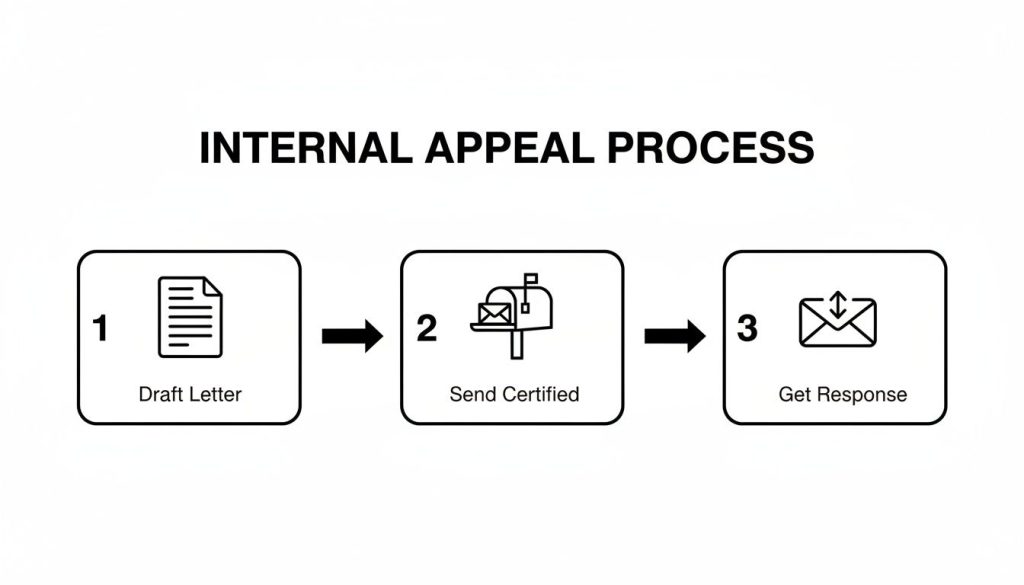
Drafting that letter, sending it certified mail, and waiting for a response creates the paper trail that makes a state-level complaint so much more powerful.
How to Submit Your Complaint Online
The easiest way to get the ball rolling is through the state’s online portal. You can start the entire process by visiting the Florida DFS Consumer Complaint Portal.
The form will walk you through exactly what’s needed. You’ll want to have this information handy before you begin:
- Your name, address, and contact info.
- The name of your insurance company.
- Your policy number and your original claim number.
- A summary of your dispute—what happened, and why you disagree with their decision.
- The outcome you’re looking for (for example, "Payment of my claim in the amount of $25,000, as outlined in the attached contractor's estimate.").
This is your chance to lay out the facts. Keep it clear, concise, and professional. Stick to the timeline of events and reference the specific documents you’re uploading as evidence.
My Pro Tip: Don't try to write your summary on the fly inside the web form. It's too easy for the page to time out and lose your work. Instead, type it all out in a Word or Google doc first. Read it over, check for typos, and make sure it’s crystal clear. Then, just copy and paste it into the portal.
When you're ready to submit your formal complaint, having all your information and documents organized is key. The table below breaks down exactly what you'll need to provide to the Florida DFS and why each piece is so important.
Florida DFS Complaint Checklist
| Information/Document | Why It's Needed | Where to Find It |
|---|---|---|
| Your Policy Number | This is the primary identifier for your account and the contract at the center of the dispute. | Your policy declarations page, insurance card, or any official correspondence from your insurer. |
| Your Claim Number | The DFS and insurer use this number to track the specific claim you're disputing. | The denial letter, emails, or any other communication related to your claim. |
| Timeline of Events | A chronological list of dates and interactions provides a clear, factual history of your claim. | Your personal notes, phone logs, emails, and saved correspondence. |
| Denial Letter | This official document states the insurer's reason for denying or underpaying your claim. It's a key piece of evidence. | The letter sent to you by the insurance company via mail or email. |
| Supporting Evidence | Photos, videos, contractor estimates, and expert reports directly counter the insurer's position. | Your phone/camera, emails from contractors, and any files from inspectors or engineers you hired. |
| All Correspondence | A complete record of emails and letters (especially your internal appeal) proves you tried to resolve this directly. | Your sent/received email folders and copies of any letters you mailed. |
Having these items ready to go will make the online submission process much smoother and ensures the DFS specialist has everything they need to start working on your case right away.
What Happens After You File
Once you hit that "submit" button, your complaint is officially in the system. You’ll get a confirmation receipt almost immediately with a case number. Guard that number—it's your reference for everything moving forward.
Here’s what you can expect to happen next:
- A Specialist Is Assigned: Your case is assigned to a DFS consumer specialist who will review your complaint and all the documents you uploaded.
- The Insurer Is Notified: The DFS formally forwards your complaint to your insurance company and legally requires them to respond.
- The Clock Starts Ticking: In Florida, the insurance company generally has 20 days to provide a formal, written response to both you and the DFS.
This isn’t just another chance for them to send a form letter. The insurer's response has to directly address the points you raised in your complaint. They are now answering to a state regulator, which forces them to be much more careful and thorough. The DFS specialist will then review the company’s response to see if it holds up under Florida’s insurance laws.
Now, it’s important to have realistic expectations. The DFS is a powerful mediator and enforcer, but they can't act as your personal lawyer or force an insurer to pay a claim if the dispute is a genuine disagreement over policy language. Their main role is to ensure the insurance company followed the law and the terms of your policy.
Even so, filing a complaint creates an official record of the insurer's behavior. If the DFS sees a pattern of bad faith from one company, they can launch a larger investigation that could lead to fines and penalties. That pressure alone is often enough to make an insurer take a second, more reasonable look at your claim. If the DFS review still doesn't get you a fair outcome, your next steps might involve mediation, appraisal, or legal action.
What to Do When Your Complaint Doesn't Settle the Score
So you’ve filed a formal complaint with the state, and the insurance company still won’t budge. This happens more often than you’d think. The Florida Department of Financial Services (DFS) does a great job of making sure the insurer responds, but they can't force a payout. If the insurance company gives a reason for their denial that sounds legally plausible on paper, the DFS's hands are often tied.
But this isn't a dead end. It’s simply a fork in the road. At this point, you’re shifting from an administrative complaint to a more formal, legal approach. That meticulously organized file you’ve been keeping? It’s about to become your most powerful tool.
First, Check Your Policy for Mediation or Appraisal Clauses
Before you even think about court, your policy itself might have the answer. Many insurance contracts require you to try mediation or appraisal first. These are forms of alternative dispute resolution (ADR), and they’re designed to settle things without the headache and expense of a full-blown lawsuit.
- Mediation: Think of this as a structured, face-to-face negotiation. A neutral, third-party mediator sits down with you and the insurance company's representative. Their job isn’t to pick a side but to help you both find a middle ground. It's an important step, but it’s non-binding—you don’t have to accept any offer you’re not comfortable with.
- Appraisal: This process is used for one thing only: settling disagreements over the cost of the damages. If the insurer agrees your roof is covered but offers you $5,000 when every roofer says it’s a $20,000 job, appraisal is how you solve it. You hire an appraiser, they hire one, and those two select a neutral "umpire." If your appraisers can't agree on a number, the umpire breaks the tie. An appraisal award is almost always binding.
These routes can be incredibly effective and much faster than going to court. For some policyholders, these steps are mandatory. For example, anyone dealing with a denial from Citizens Property Insurance faces a unique set of procedural hurdles that are different from private insurers. It's worth a moment to understand what to do when you're denied by Citizens Property Insurance because their process has its own rulebook.
Taking the Fight to Small Claims Court
If the dispute is over a smaller amount, don’t overlook Florida’s small claims court. It was created specifically for situations like this, allowing regular people to resolve conflicts without getting tangled up in the massive cost and complexity of a traditional lawsuit.
In Florida, small claims court can handle disputes up to $8,000. The process is streamlined, the filing fees are manageable, and you can absolutely represent yourself. You’ll file a "Statement of Claim," have the insurance company served, and then present your evidence—photos, estimates, emails—directly to a judge who will make a final ruling.
Small claims court is the great equalizer. It strips away the insurance company's advantage of having a huge legal department by simplifying the rules. The facts of your case, not legal maneuvering, take center stage.
This is a fantastic option when the money you're owed is within that $8,000 limit and the issue is clear-cut, like an insurer refusing to pay for a specific repair that your policy obviously covers.
Knowing When It's Time for a Lawsuit
Sometimes, you have no other choice. If your claim is worth a significant amount of money, involves complex issues, or you have a gut feeling the insurance company is deliberately acting in bad faith, litigation might be the only path forward. Suing your insurer is a huge step, but it’s your ultimate right as a policyholder.
A lawsuit against an insurance company usually boils down to one of two things:
- Breach of Contract: This is the most straightforward claim. You’re arguing that the insurance policy is a contract, and the insurer broke it by wrongfully denying or underpaying your claim.
- Bad Faith: This is a much more serious allegation. Here, you’re not just saying the insurer was wrong; you’re saying they knew they were wrong and acted unreasonably. This can include things like intentionally dragging out your claim for months, misrepresenting the facts, or simply refusing to communicate.
Going to court is a long, demanding journey filled with legal motions, depositions, and potentially a full trial. This is not a road you should walk alone. Once you’re at this stage, trying to handle it without an experienced insurance attorney is a recipe for disaster. A good lawyer will manage the entire legal battle, protect your rights, and make sure your case is as strong as it can possibly be.
When Should You Call an Insurance Attorney?
While you can often resolve smaller issues through an internal appeal or a state complaint, some situations just scream for professional legal help. It's not always easy to know when you've hit that point, but there are a few clear signs that you're in over your head.
If your insurer starts throwing around accusations of fraud, making threats, or just completely stops responding to you, it's time to stop talking to them directly. These are serious red flags and often signs of bad faith tactics. Likewise, if your claim is for something catastrophic—like your home being a total loss after a hurricane—or if your policy language is a confusing mess, you'll benefit from having an expert in your corner right from the start.
What an Experienced Attorney Brings to the Table
Hiring a lawyer who specializes in insurance claims changes everything. Suddenly, you're not the one dealing with the endless phone calls, complicated paperwork, and frustrating negotiations. Your attorney takes over, cutting through the insurer's delay tactics and legal jargon. They’ve seen the playbook before and know how to build a case that punches holes in the insurance company's arguments.
Think of it this way: the insurance company has a whole team of lawyers protecting their interests. An attorney levels that playing field and ensures you have a professional fighting just as hard for you.
Most property damage law firms, like us here at Tarrash & Tarrash, work on what’s called a contingency fee basis. It’s a simple arrangement: we don’t get paid unless you do. This means you can get expert advice and a full case evaluation without any upfront cost or financial risk, making professional legal help accessible when you need it most.
Answering Your Questions About Filing an Insurance Complaint
It’s completely normal to have a lot of questions when you’re thinking about filing a formal complaint against your insurance company. Let’s walk through some of the most common concerns we hear from Florida homeowners to give you a clearer picture of what to expect.
How Long Does This Whole Process Take?
There's no single, one-size-fits-all answer here—the timeline really depends on the specifics of your case. After you submit an internal appeal directly to your insurer, you can generally expect to wait 30 to 60 days for them to give you a final decision.
If that doesn't work and you take the next step by filing a complaint with the Florida Department of Financial Services (DFS), the clock starts ticking for your insurer. They are legally required to respond to the DFS within 20 days.
From there, how quickly your case is fully resolved hinges on how complex your claim is and whether your insurance company is willing to come to the table and negotiate fairly. Some complaints get wrapped up within a few weeks of the DFS stepping in. Others, however, might need to go to mediation, which can easily add a few more months to the process.
Will My Insurance Company Punish Me for Complaining?
This is a big one, and it’s a valid fear. But here’s the good news: it is completely illegal for an insurance company to retaliate against you for filing a legitimate claim or a formal complaint. They can't just cancel your policy or hike up your rates out of spite. Florida law is very clear on this and protects homeowners from these kinds of punitive actions.
An insurer can only non-renew or cancel your policy for legally sound reasons, like if you stop paying your premiums or if there's a major change in the risk profile of your property. Simply exercising your rights as a consumer by filing a good-faith complaint is not one of those reasons.
When you file a formal complaint, you're not just arguing your case—you're creating an official record with a state regulator. This documents the insurer's actions and holds them accountable in a way that an internal appeal simply can't. If a pattern of bad faith emerges, that record is invaluable.
What Happens if I Mess Up on the Complaint Form?
Don't panic. A small mistake isn't going to sink your case. If you've already sent your complaint to the DFS and then realize you forgot to attach a key document or mistyped a date, you can almost always get in touch with the consumer specialist assigned to your case to submit the corrected information.
The best strategy, of course, is to be as meticulous as you can from the very beginning. A little organization goes a long way.
- Check your numbers twice: Make absolutely sure your policy and claim numbers are correct.
- Keep your summary sharp: Write a clear, straightforward timeline of what happened.
- Label your evidence: Give your uploaded files logical names, like "Roofer_Estimate_June.pdf" or "Initial_Denial_Letter.pdf."
Presenting a clear, well-organized case helps the DFS specialist grasp the situation quickly and advocate for you more effectively. When in doubt about a detail, it’s always better to ask than to guess.
When you're up against a difficult insurer and the process feels like too much to handle on your own, having an experienced advocate on your side can make all the difference. Tarrash & Tarrash is here to level the playing field. We manage the entire claims process and fight to get you the full and fair compensation you're owed.
Contact us today for a free, no-obligation consultation to discuss your case at https://tarrashlaw.com