That first gut-wrenching moment when you suspect your loved one is being abused or neglected is a mix of anger, disbelief, and fear. Your mind races. What do I do? Who do I call?
To report nursing home abuse in Florida, your first two calls should be to the state's Long-Term Care Ombudsman Program at 1-888-831-0404 and the Florida Abuse Hotline for Adult Protective Services (APS) at 1-800-96-ABUSE. Making these calls kicks off the official investigation process, but before you pick up the phone, your absolute first priority is making sure your family member is safe.
Your First Actions When Suspecting Abuse
It’s incredibly distressing to find signs of mistreatment. It’s okay to feel overwhelmed, but what you do in these first few hours is critical. We'll walk through a clear, calm plan to get your loved one out of harm's way and start the reporting process correctly.
This problem is far more widespread than most people imagine. The sad truth is that most incidents are never even brought to light. Some of the statistics are just staggering—experts estimate that only 1 in 24 cases of elder abuse ever gets reported.
Think about that. The vast majority of victims are left to suffer in silence. In one major study of over 2,000 nursing home residents, 44% said they had been abused, and an unbelievable 95% reported that they had either been neglected themselves or had seen another resident being neglected. You can learn more about these nursing home abuse statistics to see just how deep this crisis runs.
Assess the Immediate Danger
First things first: is your loved one in immediate danger? Trust your instincts. If you see signs of a serious physical injury, if they are being threatened, or if they're in acute medical distress from neglect, don't hesitate. Call 911 immediately. This is the only right answer in an emergency.
If the situation isn't a life-threatening emergency—maybe you've noticed unexplained bruises, a sudden decline in hygiene, or troubling changes in their personality—the goal is to create a safe space to talk. Try to speak with them privately, away from any staff members who might overhear or intimidate them.
Begin Your Documentation Log
Before making a single phone call, grab a notebook or open a new note on your phone. This is going to become your evidence log. It's so easy to forget small but crucial details when you're under stress.
Write down the date and time of your visit and everything you observed. Be specific.
- What did you see? Instead of "a bruise," write "A dark purple bruise, the size of a quarter, on Mom's left forearm."
- What did you hear? Document direct quotes if you can. For example, "Dad said 'the big aide with the tattoo' is always rough when moving him from the bed to his chair."
- Who was present? Note which staff members were on duty, even if they weren't directly involved. "Nurse Jane Doe was at the nursing station when I arrived."
This log will be the foundation of your official report. A detailed, written timeline is infinitely more powerful than a panicked, vague recollection.
Taking a few moments to write down exactly what you observed—using objective language—provides clarity and credibility. This simple act transforms a general concern into actionable evidence that agencies can use to start a meaningful investigation.
Making the Initial Report
With your initial notes ready, it’s time to take action. It can be confusing trying to figure out who to call first, but Florida has a very clear system. You don’t have to pick just one agency; in fact, you should often contact several. The idea is to build a team of advocates and investigators who can tackle the problem from multiple angles.
To help you get started, here’s a quick-reference guide to the main contacts in Florida.
Florida Nursing Home Abuse Reporting Quick-Reference Guide
This table breaks down who to call, why, and when. Each agency plays a different but essential part in protecting residents and making sure facilities are held responsible.
| Agency/Hotline | Contact Information | Primary Role |
|---|---|---|
| Emergency Services | 911 | Call for any immediate medical emergencies or if a crime is in progress. |
| Long-Term Care Ombudsman | 1-888-831-0404 | A resident advocate who investigates and helps resolve complaints confidentially. |
| Adult Protective Services (APS) | 1-800-96-ABUSE (1-800-962-2873) | The state's primary agency for officially investigating abuse, neglect, and exploitation. |
| Agency for Health Care Admin (AHCA) | 1-888-419-3456 | The state agency that licenses and regulates nursing homes; investigates facility-wide safety and compliance. |
For most situations, you'll want to start by calling both the Ombudsman and APS. They operate on parallel tracks—one focused on advocating for your loved one, the other on investigating the report of abuse. Getting them involved sends an immediate and powerful message to the nursing home that their actions are being watched.
Recognizing the Signs of Elder Abuse and Neglect
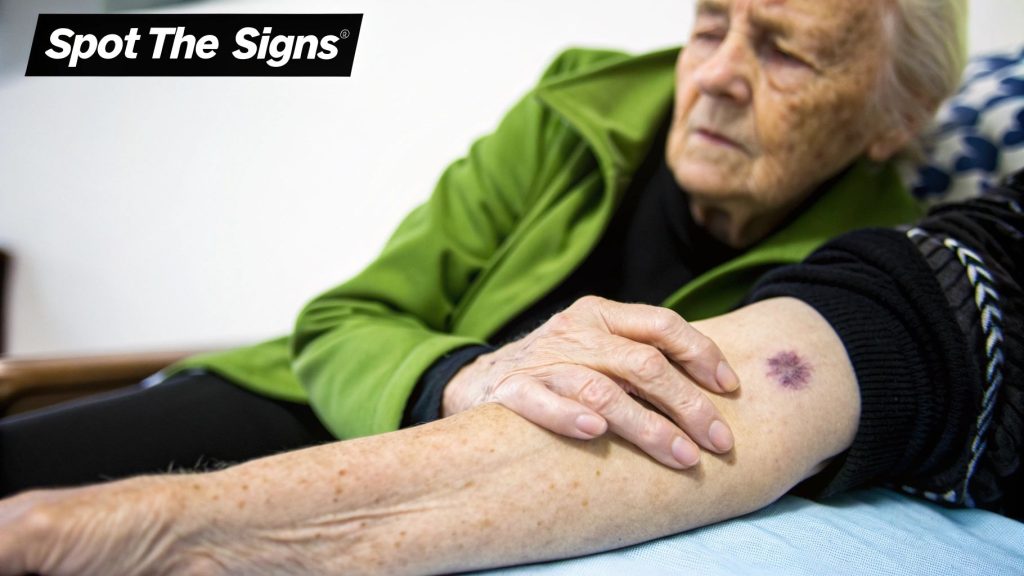
Abuse in a nursing home rarely looks like it does on TV. It's usually not a single, dramatic event. Instead, it’s often a slow burn—a series of small, unsettling incidents that are easy to brush off on their own. The first step in learning how to report abuse is learning to trust your gut when those small things start adding up to a pattern that just feels wrong.
The key is to pay close attention to any changes in your loved one’s physical health, emotional state, or overall dignity. What might seem minor at first can often be a sign of a much larger problem.
Uncovering Physical Warning Signs
When people think of physical abuse, they usually picture bruises. But it’s much more than that. While any injury that can't be explained is a huge red flag, the type and location of an injury can tell you a lot. For example, bruises on the inner arms or thighs are highly suspicious, as those aren't areas someone typically bumps during an accidental fall.
You need to look for patterns that point to force or restraint:
- Fingerprint-shaped marks on the arms, wrists, or neck are a tell-tale sign of someone being grabbed or held down.
- Matching bruises on both sides of the body, like on both upper arms, might suggest someone was squeezed or restrained.
- A history of repetitive injuries, like frequent sprains or fractures, could indicate ongoing mistreatment, not just a series of unlucky accidents.
And don't forget to watch their body language. A resident who suddenly becomes afraid of being touched or who visibly flinches when a caregiver gets close is telling you something is wrong, even if they can't find the words.
Recognizing the Signals of Neglect
Neglect is a quieter, more insidious form of harm, but it can be just as deadly. It’s not about an action, but a lack of action—a facility’s failure to provide the basic standard of care your loved one needs to stay healthy and safe.
The signs often pile up over time. You might notice their personal hygiene slipping, with unkempt hair, dirty fingernails, or a persistent body odor. Their room might be consistently dirty, with soiled sheets or an overflowing trash can.
One of the most alarming red flags for neglect is sudden, unexplained weight loss. This can mean they aren't getting enough food, aren't receiving help with eating, or a serious health issue is being completely ignored by the staff.
Another critical sign is the appearance of pressure ulcers, better known as bedsores. These painful wounds are almost always preventable with basic care, like turning a resident regularly and keeping their skin clean. Finding a bedsore is a powerful signal of serious neglect. Because these are such a clear indicator, we've put together a resource on how to handle bedsore claims in our detailed guide.
Spotting Emotional and Psychological Abuse
Emotional abuse is invisible, but the damage it does is very real. It can be anything from verbal insults and threats to intimidation and deliberate isolation. The abuser’s goal is to control, humiliate, and scare the resident. The evidence is almost always behavioral.
Keep an eye out for any sudden, drastic shifts in your loved one's personality:
- Uncharacteristic withdrawal: A person who was once outgoing suddenly becomes silent, non-communicative, or refuses to participate in activities.
- Sudden agitation or fear: They might seem constantly on edge, especially around a particular staff member.
- Repetitive, self-soothing behaviors: Things like rocking back and forth or mumbling can be a response to severe stress or trauma.
If your loved one seems afraid to speak openly when staff members are around, that's a major red flag. They may have been threatened or told they'll be in trouble if they complain to family.
Identifying Financial Exploitation
Financial abuse is a calculated crime that targets a resident’s trust and vulnerabilities. It can start small, making it incredibly hard to spot until the financial damage is already significant.
The warning signs usually show up in their bank statements and personal environment:
- Unexplained withdrawals or strange charges on their accounts.
- Personal items going missing, like jewelry, cash, or new electronics you brought them.
- Sudden changes to a will, trust, or power of attorney, especially if a new staff member is suddenly listed as a beneficiary.
- Bills going unpaid or collection notices arriving, even though they should have plenty of money to cover their expenses.
Be immediately suspicious if a caregiver takes an unusual interest in your loved one's finances or tries to isolate them from you during financial discussions. This is a classic tactic abusers use to gain control and access their money.
How to Effectively Document What You Witness
When you suspect something is wrong, what you see and hear is more than just a gut feeling—it's potential evidence. Building a strong case against nursing home abuse or neglect hinges on your ability to document everything clearly and consistently. This isn't about starting a fight; it's about creating an undeniable, objective record that can protect your loved one.
Think of yourself as a quiet observer, gathering facts. Your notes and photos will transform a general sense of unease into a specific, actionable complaint that investigators, state agencies, and attorneys can use.
Start a Dedicated Journal—Today
The single most important thing you can do right now is start a journal. It can be a simple notebook or a digital file, but keep it dedicated solely to this purpose. From this point forward, every entry needs to start with the date and time of your visit or conversation.
Vague notes won't cut it. "Mom seemed sad" is easy to dismiss. Detailed observations are not.
- Capture Direct Quotes: Don't paraphrase. Write down exactly what was said. For example, "At 2:15 PM, I asked why Dad’s bedsheets were soiled. Nurse Smith told me, 'We're short-staffed again.'"
- Note Who Was There: Get the names and titles of the nurses, aides (CNAs), and any administrators you speak with. Who was on duty? Who witnessed the event?
- Describe the Scene: Instead of "the room was messy," get specific. "Entered Room 204 at 10:00 AM. Observed an overflowing trash can, dried food on the bedside table, and a strong smell of urine."
This journal does more than just record incidents; it creates a timeline. That timeline can reveal patterns of neglect or repeated abuse that are impossible for the facility to ignore.
Take Clear, Compelling Photos
A picture is worth a thousand words, especially when it shows something that shouldn't be there. Photos and videos can be incredibly powerful, but you have to capture them the right way. Your phone automatically date- and time-stamps images, which is perfect for this.
Focus your camera on capturing undeniable proof of:
- Visible Injuries: Get clear shots of bruises, cuts, bedsores, and any other unexplained marks. Take pictures from different angles and in good light so the injury is clearly visible.
- Unsanitary Living Conditions: Snap photos of dirty rooms, soiled bedding, pest problems, or dangerous clutter in hallways that could cause a fall.
- Obvious Signs of Neglect: If your loved one looks unkempt, is wearing dirty clothes, or shows clear signs of poor hygiene, document it with a photo.
A Pro Tip From Experience: When you photograph an injury, place a common object like a quarter next to it. This simple trick provides an immediate sense of scale, helping investigators grasp the true size and severity of the wound.
Gather and Organize Key Paperwork
Your own observations are just one piece of the puzzle. The facility's own paperwork can often tell the real story of what’s happening when you aren't around.
You have a right to your loved one's medical records. Request a copy and go through them carefully. Look for reports of unexplained injuries, sudden changes in medication that weren't discussed with you, or any inconsistencies in the nursing notes.
Keep a sharp eye on their financial statements, too. Financial exploitation is a quiet but devastating form of abuse. Watch for unusual bank withdrawals, strange credit card charges, or sudden changes to a will or power of attorney. Start a file and keep everything organized—bank statements, facility bills, and medical reports. This level of detailed proof is absolutely vital, especially if you decide to explore your legal options. You can see how this evidence plays a crucial role by learning more about nursing home claims and how they are built.
Identify Potential Witnesses
Chances are, you're not the only person who has noticed that something is wrong. Other residents, their family members, and even a few compassionate staff members could be potential witnesses. You're not a private investigator, but you can discreetly note who might have seen or heard something important.
In your journal, jot down the names of other visitors who were in the room during an incident or a staff member who looked genuinely concerned. If another resident tells you about their own mistreatment, note their name and what they told you. This is invaluable information you can pass along to official investigators, who are trained to conduct proper interviews. Having someone else to back up your story can make all the difference, confirming the problem is real and not just an isolated event.
Who Do You Call? Navigating Florida's Reporting Agencies
When you suspect abuse, figuring out who to call can feel overwhelming, especially when you're already in a stressful situation. Florida has several agencies designed to help, but each plays a distinct role. It’s not about finding one "perfect" number; it's about alerting the right professionals who can tackle the problem from different angles.
Knowing the difference between these groups is crucial. Contacting the right one first ensures your complaint is handled by investigators with the proper authority and gets the fastest, most effective response. An ombudsman, for example, is an advocate for resident rights, while Adult Protective Services (APS) conducts formal abuse investigations. Let's break down who does what.
The Long-Term Care Ombudsman Program: Your Resident Advocate
Think of the Ombudsman Program as your loved one's personal advocate, a neutral problem-solver who works for the resident, not the facility. These trained representatives are your best first call for issues that impact quality of life, dignity, and resident rights.
They are the people to call when you have concerns about:
- Poor hygiene, unanswered call lights, or consistently cold food.
- Disputes over the resident's care plan.
- Problems with how a resident's personal funds are being handled.
- Any situation where you feel the resident isn’t being heard or respected by staff.
An ombudsman’s goal is to resolve problems through mediation and negotiation. Their services are free and completely confidential. While they don't launch a formal state investigation, they have the authority to access records and work within the system to fix things. For many families, they are an invaluable first line of defense.
Adult Protective Services (APS): The Official Investigators
When a situation moves beyond a quality-of-care issue and into potential abuse, neglect, or exploitation, your immediate call must be to Florida's Adult Protective Services (APS).
APS is the agency tasked with officially investigating serious allegations. You can reach them 24/7 through the Florida Abuse Hotline at 1-800-96-ABUSE.
Once you make a report, an investigator is assigned to assess the resident's immediate safety and conduct a full investigation. This involves interviewing the resident, family, and staff, as well as reviewing medical charts and other records. Their sole focus is to determine if abuse occurred and to put protective services in place. Their findings are critical and can be used as evidence if you decide to take legal action later.
An ombudsman resolves disputes, but APS investigates potential crimes and serious violations. If you believe your loved one has been physically harmed, financially exploited, or dangerously neglected, calling APS isn't optional—it's essential.
The Agency for Health Care Administration (AHCA): The Facility Regulator
The Agency for Health Care Administration (AHCA) is the state entity that licenses and regulates every nursing home in Florida. Think of them as the "facility police." While APS focuses on the victim, AHCA focuses on whether the facility is following state and federal laws.
File a complaint with AHCA when you see systemic problems that endanger all residents, such as:
- Inadequate staffing levels that lead to widespread neglect.
- Unsafe building conditions or unsanitary living areas.
- Repeated failures in infection control.
- Clear violations of state regulations you've observed during visits.
An AHCA investigation can lead to serious consequences for the facility, including fines, sanctions, or even having its license revoked. Reporting to AHCA holds the entire organization accountable.
Local Law Enforcement: For Criminal Acts
It’s critical to remember that some actions are more than just rule violations—they are crimes. Physical abuse, sexual assault, and theft are criminal acts and must be reported to the police.
If you witness a crime or have strong evidence one has occurred, call your local police department or sheriff's office immediately. Use 911 for emergencies in progress. Otherwise, use the non-emergency line to file a police report. A police investigation is completely separate from the administrative ones run by APS or AHCA and is the only way to hold an abuser personally accountable under criminal law.
Comparing Florida's Key Reporting Agencies
Trying to decide who to contact first can be confusing. This table gives you an at-a-glance comparison of the primary agencies, their focus, and what you can expect from each.
| Agency | Primary Focus | Typical Outcome | Best For |
|---|---|---|---|
| Long-Term Care Ombudsman | Resident rights, quality of care, dispute resolution | Mediation, problem-solving, policy changes | Resolving day-to-day care issues and ensuring resident dignity. |
| Adult Protective Services (APS) | Investigating abuse, neglect, and exploitation | Safety plans, protective services, official findings of abuse/neglect | Suspected physical, emotional, sexual, or financial harm. |
| Agency for Health Care Admin. (AHCA) | Facility compliance with state/federal laws | Fines, sanctions against the facility, license revocation | System-wide problems like understaffing or unsafe conditions. |
| Local Law Enforcement | Criminal acts (assault, theft, etc.) | Arrest, criminal charges, and prosecution of the individual perpetrator | When you believe a specific crime has been committed against your loved one. |
Remember, you don't have to pick just one. In many cases, especially serious ones, you may end up reporting the situation to APS, AHCA, and the police.
When you're first getting your thoughts in order, a simple flowchart can help you focus on the most important first steps.
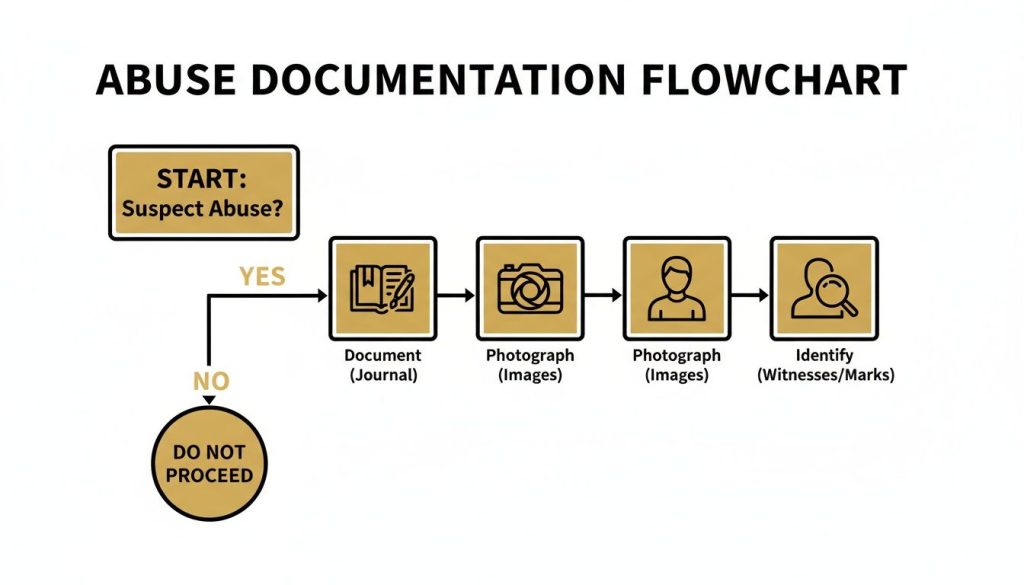
As you can see, your first actions should always center on creating a factual record. Document what happened, take photos if possible, and identify the key people involved. This groundwork is vital no matter which agency you contact.
When It's Time to Call a Nursing Home Abuse Attorney
State agencies do a vital job investigating facilities and enforcing regulations, but their focus is on the facility's compliance, not your family's personal losses. Their goal is to get the home back in line with state rules. A nursing home abuse attorney, however, works for you and only you. Their mission is to fight for justice and get financial recovery for the harm your loved one suffered.
So, when do you make that call? It’s a crucial decision point. If the abuse or neglect led to a serious physical injury, deep emotional trauma, or a major financial hit, it's time to speak with an attorney. They can look at the facts and give you a straight answer about whether you have a strong case and what your family's legal rights are.
You Have a Right to Compensation
A civil lawsuit is completely separate from any fines or penalties the state might levy against the nursing home. This is about holding the facility financially responsible for the specific damages their negligence or abuse caused your family. An experienced lawyer can help you fight for compensation that covers a lot more than just the immediate medical bills.
Here’s a look at what we typically pursue in a nursing home abuse case:
- Medical Expenses: This covers everything from the initial hospital stay and doctor's appointments to ongoing physical therapy and any future medical care needed because of the injuries.
- Pain and Suffering: This is compensation for the actual physical pain and emotional anguish the resident was forced to endure. It's an acknowledgment of the human cost of their neglect.
- Disability or Disfigurement: If the injury is permanent and affects your loved one’s quality of life or changes their appearance, this is meant to compensate for that loss.
- Wrongful Death: Tragically, abuse and neglect can be fatal. If this happens, the family has the right to file a wrongful death claim to hold the facility accountable.
The ultimate goal is to secure funds that can pay for better care in a new facility, cover all the unexpected costs, and deliver a measure of justice for the inexcusable harm that was done.
Let's be clear: no amount of money can ever erase the trauma of abuse. But a successful civil claim does something else—it sends a powerful message that failing to protect residents will have severe financial consequences. Often, that financial pressure is the single biggest motivator for a facility to finally make real, lasting changes to how they operate.
Finding the Right Legal Partner for This Fight
These are not simple personal injury cases. Florida's nursing home regulations are a maze, and you absolutely need a legal team that lives and breathes this specific area of law. Don't just go with any firm; look for one with a proven track record of going up against these large long-term care corporations and winning.
When you're meeting with potential attorneys, ask them directly about their experience with cases just like yours. Ask how familiar they are with AHCA and Adult Protective Services. You want a lawyer who knows exactly how to take the findings from a state investigation and use them to build an even stronger civil case. The right legal team truly makes all the difference, which is why it’s so important to find the right nursing home abuse attorneys who will best represent your family.
How to Prepare for Your First Consultation
Any reputable nursing home abuse lawyer will offer a free, no-obligation consultation. This is your chance to tell your story and for them to give you an honest assessment of your case. To get the most out of this meeting, you need to walk in prepared.
That documentation log you’ve been keeping? It's your most powerful tool now.
Bring it with you, organized and ready to go. Here’s what you should have:
- Your Detailed Journal: The timeline of what happened, your observations, and notes from every conversation.
- Photos and Videos: Any visual proof you have of injuries, dirty rooms, or anything else that shows neglect.
- Key Paperwork: Copies of medical records you've managed to get, financial statements showing strange withdrawals, and any letters or emails you've exchanged with the facility's management.
- A List of Witnesses: Names and contact info for any staff members, other residents, or visitors who saw something and might be willing to speak up.
When you lay all this out, you’re not just having a conversation; you're starting a strategic planning session. It gives the attorney the ammunition they need to provide a clear, informed analysis of your legal options and sets a strong foundation for the fight ahead.
Answering Your Most Pressing Questions About Reporting Abuse
Making the call to report suspected abuse is tough. It’s natural to feel a mix of anger, fear, and uncertainty. You're worried about your loved one, and the whole process can seem overwhelming. Let's walk through some of the most common concerns we hear from families just like yours.
What If the Nursing Home Retaliates Against My Loved One?
This is, without a doubt, the number one fear families have. Let me be clear: It is 100% illegal for a nursing home to retaliate against a resident or their family for reporting abuse. That said, the fear itself is very real and needs to be handled head-on.
When you make your report to the Long-Term Care Ombudsman or Adult Protective Services, tell them you are worried about retaliation. They are trained for this. Investigators can conduct unannounced visits and increase their monitoring to ensure nothing happens. Another powerful move is to have an attorney send a formal letter to the facility. This puts them on notice that their actions are being watched closely under the threat of legal action.
Can I Make an Anonymous Report in Florida?
Yes, you absolutely can. The Florida Abuse Hotline allows you to report your concerns to Adult Protective Services without giving your name. It’s a crucial option for those who fear for their own safety or job.
However, from an investigator's perspective, a report is often stronger when they have a contact person. It lets them ask follow-up questions that could be the key to cracking the case. By law, your identity is kept confidential from the nursing home, so you can provide your name without them ever knowing you were the one who made the report. The Ombudsman program is also bound by strict confidentiality, always putting the resident's wishes first.
The ultimate goal is to protect the resident. While you can report anonymously, confidentially providing your contact info often gives investigators the tools they need to build a much stronger case.
How Long Will the Investigation Take?
This really depends on who is investigating and how complicated the situation is. There isn't a single timeline, as each agency has its own process.
- Adult Protective Services (APS): If your report suggests immediate danger, APS has to start its investigation within 24 hours. A complete investigation usually wraps up in 30 to 60 days.
- Agency for Health Care Administration (AHCA): When AHCA investigates a facility for breaking state rules, it can be a longer haul. These reviews often take several weeks or even months.
- A Civil Lawsuit: If you hire an attorney to file a lawsuit, that’s a completely separate track. These cases follow their own legal schedule and can take many months or even over a year to resolve.
What Happens When a Nursing Home Is Found Guilty?
When an investigation proves that abuse or neglect occurred, the consequences can be serious. If a state agency like AHCA confirms the findings, the nursing home could be hit with massive fines, be barred from admitting new residents, or, in the worst cases, lose its license entirely.
If law enforcement gets involved and criminal charges are filed, individual staff members could face prosecution and jail time. And if a civil lawsuit is successful, the facility is ordered to pay financial compensation to the victim and their family. This money is meant to cover medical costs, account for pain and suffering, and hold the facility financially responsible for the immense harm they caused.
When your family is facing the devastating reality of nursing home abuse, you need advocates who will fight tirelessly on your behalf. Tarrash & Tarrash has the experience and determination to hold negligent facilities accountable and secure the justice your loved one deserves. If you suspect abuse, contact us for a free, confidential consultation to understand your legal options at https://tarrashlaw.com