That sinking feeling you get when you see a water stain blooming on your ceiling is always followed by one question: will my insurance cover a roof leak?
The short answer is, it all comes down to why the roof is leaking. If a sudden, unexpected event is the culprit—like a storm or a falling tree—you're probably in good shape. But if the leak is the result of simple old age or a lack of maintenance, you'll likely be paying for the repairs out of your own pocket.
Decoding Your Homeowners Policy for Roof Leaks
It’s easy to think of your insurance policy as a catch-all warranty for your home, but that's not quite right. A better way to see it is as a financial shield against sudden, accidental disasters. The entire decision of whether your roof leak claim gets paid hinges on one core concept: the difference between a "covered peril" and a maintenance issue.
Insurance carriers are in the business of covering damage from abrupt events you couldn't have prevented. They aren't, however, on the hook for problems that crop up over time because a homeowner didn't perform regular upkeep. This distinction is everything.
The Critical Difference: Sudden Damage vs. Gradual Wear
Getting a handle on this concept is the key to understanding your claim. The cause of the leak truly dictates the outcome.
- Sudden and Accidental Damage (Often Covered): This is for things that happen out of the blue and cause immediate problems. Think of a heavy windstorm tearing shingles off your roof, or a healthy tree branch crashing down and punching a hole right through it. Hail damage is another classic example.
- Gradual Wear and Tear (Often Excluded): This covers the slow, inevitable decline of your roof over the years. We're talking about shingles that have become old, brittle, and cracked from years of sun exposure, or flashing around a chimney that has slowly degraded, finally letting a small drip turn into a real problem.
To help you visualize this, here's a quick reference guide for some common scenarios.
Quick Guide: Roof Leak Coverage Scenarios
| Cause of Leak | Generally Covered? | Key Factor |
|---|---|---|
| Windstorm or Hail Damage | Yes | A sudden, named peril caused the damage. |
| Falling Tree or Debris | Yes | An external, accidental event is the clear cause. |
| Old, Worn-Out Shingles | No | This is considered a maintenance issue, not a sudden event. |
| Ice Dams | Often | The resulting water damage is usually covered, but not the dam removal itself. |
| Poor Installation/Workmanship | No | This falls on the contractor, not your insurance policy. |
| Roof Nearing End of Lifespan | No | Gradual deterioration is an expected cost of homeownership. |
This table simplifies it, but the principle is clear. An insurance adjuster is trained to look for that clear line between an accident and neglect.
For example, the water damage to your drywall and floors from a storm-damaged roof is almost always covered. But if that exact same interior damage came from a slow leak you’ve known about for three years but never fixed, the insurer will almost certainly deny the claim on the grounds of negligence. Your job is to maintain the roof; their job is to protect you from the unexpected. Figuring out which category your situation falls into is the first and most important step.
Covered Perils vs. Exclusions: The Deciding Factor
When it comes to a roof leak claim, everything hinges on one critical question: what caused the leak? Your insurance policy is built around this very distinction, separating problems it will pay for (covered perils) from those it won't (exclusions).
Getting this right from the start is the most important part of the entire claims process.
Think of a "covered peril" as a specific, named disaster your insurance company has agreed to protect you from. These are the sudden, accidental events that are completely out of your control. For any Florida homeowner, understanding this list is non-negotiable.
What Is a Covered Peril?
These are the heroes in your insurance story—the events that trigger your coverage and get your checkbook opened for repairs. While every policy has its own unique language, most standard homeowner policies will cover damage from things like:
- Wind and Hail: This is the big one for us in Florida, especially during hurricane season. A classic example is wind lifting shingles or a hailstorm pockmarking your roof, creating an entry point for water.
- Falling Objects: If a storm sends a healthy tree branch (or the whole tree) crashing through your roof, the leak that follows is almost always covered.
- Fire and Lightning: It’s pretty straightforward—if a fire or lightning strike damages your roof and causes a leak, that's a clear-cut covered peril.
- Sudden Water Discharge: This one is a bit different. Imagine a pipe bursting in your attic. If that sudden event causes immediate water damage that results in a leak, it’s often covered.
The common thread here is that the cause was abrupt, unexpected, and accidental. You need to show that the leak is a direct result of one of these specific events.
What Are Policy Exclusions?
Now for the other side of the coin: exclusions. These are the specific circumstances your policy explicitly states it will not cover. Insurers view these as issues that fall under the homeowner's responsibility to manage.
The single biggest exclusion you’ll encounter with roof leaks is wear and tear. Your insurance policy is not a home maintenance plan. If your roof starts leaking simply because it’s 20 years old and the materials have broken down, your claim will be denied.
Other common exclusions to watch out for include:
- Gradual Deterioration: Think of shingles that have become brittle and cracked after two decades of baking in the Florida sun.
- Lack of Maintenance: If you knew about a few missing shingles for months but never fixed them, and a simple rainstorm causes a major leak, the insurer will likely point to neglect.
- Faulty Workmanship: A leak caused by a roofer who installed the flashing incorrectly five years ago isn't a covered peril; it's a construction issue.
- Pest Damage: Leaks that start because termites, squirrels, or other critters have chewed through your roof are typically not covered.
Key Takeaway: When an adjuster visits your home, their main goal is to figure out if the leak was caused by a sudden, covered event or a gradual, excluded issue. Your entire claim depends on your ability to prove it was the former.
To make this concept perfectly clear, here's a quick breakdown of how insurers see different scenarios.
Roof Leak Coverage Cause vs Exclusion
This table compares common causes of roof leaks and shows why one might be covered while another is denied.
| Cause of Leak | Typically Covered? | Why or Why Not? |
|---|---|---|
| Hail-Damaged Shingles | Yes | The damage was caused by a sudden, specific weather event (a covered peril). The dents and cracks are direct evidence of this event. |
| Sun-Cracked Shingles | No | The damage occurred gradually over many years due to normal sun exposure. This is considered wear and tear (an exclusion). |
| Wind-Driven Rain Damage | Yes | A powerful storm forces water under shingles, causing a leak. The storm is the covered peril. You can learn more about how wind-driven rain roof damage is handled in claims. |
| Faulty Flashing | No | The leak is due to improper installation or degraded sealant, which is a maintenance or workmanship issue (an exclusion). |
Grasping this fundamental difference is your best tool. It prepares you for that first call with the insurance company, helps you gather the right kind of proof, and allows you to quickly spot whether a denial is based on solid policy language or just a questionable judgment call.
How to Read Your Insurance Policy for Roof Coverage
Let's be honest—your insurance policy probably looks like a dense legal document you'd rather use as a doorstop. It's filled with confusing clauses and industry jargon. But knowing how to decipher just a few key sections can make all the difference, turning you from a confused homeowner into someone who knows their rights.
The absolute best time to figure out what your policy says is before a storm hits. When you open up your policy, don't get lost in the weeds. You're hunting for two little acronyms that carry a massive financial punch: RCV and ACV.
Replacement Cost Value vs. Actual Cash Value
These two terms dictate how your insurance company will pay for a new roof, and the difference can easily be tens of thousands of dollars.
- Replacement Cost Value (RCV): This is the one you want. Think of it as "new for old." RCV coverage pays the full cost to replace your damaged roof with brand-new materials of similar quality. It doesn't matter how old your roof was; you get what it costs to make it whole again.
- Actual Cash Value (ACV): This is essentially the Kelley Blue Book value of your roof. An ACV policy pays you for what your roof was worth the moment before it was damaged. The insurer starts with the replacement cost, then subtracts a hefty amount for depreciation based on its age and condition.
Here’s a real-world example: A roof with a 25-year lifespan that’s already 15 years old has lost 60% of its value. If a full replacement costs $20,000, an RCV policy would cover that entire amount (minus your deductible, of course). But an ACV policy? It might only pay out $8,000, leaving you on the hook for the remaining $12,000. This is easily the most important financial detail in your policy.
In South Florida, where hurricane season is a way of life, this distinction is everything. Firms like Tarrash & Tarrash in Boca Raton have recovered over $15 million for clients by challenging insurers like State Farm and Citizens on these very terms. They know that a policy's fine print—whether it's an RCV clause that secures $15,000 for a full replacement, or an ACV clause that only gets you $6,000-$8,000—determines a family's ability to recover. You can see how often these issues come up by looking at water damage insurance claims statistics.
Open Perils vs. Named Perils
Once you know how you'll be paid (RCV vs. ACV), you need to figure out what kinds of damage are even covered in the first place. This comes down to whether you have an "Open Perils" or "Named Perils" policy.
Think of it as two completely different rulebooks for the same game.
- Open Perils Policy (sometimes called "All-Risk"): This is the good stuff. It’s the most comprehensive and homeowner-friendly option because it covers damage from all causes... unless it's specifically listed in the exclusions section. With this policy, the burden of proof is on the insurance company to prove the damage was caused by something they excluded.
- Named Perils Policy: This one is much more restrictive. It only covers damage from the specific causes, or "perils," that are explicitly listed in the policy—things like fire, lightning, windstorm, and hail. If the cause of your roof leak isn't on that list, you're out of luck. The burden of proof is on you to show that a covered event caused the damage.
Finding this language is critical. Scan for sections with titles like "Covered Causes of Loss," "Perils Insured Against," or "Exclusions." Knowing whether you have to prove what is covered or the insurer has to prove what isn't gives you a huge strategic advantage right from the start.
A Step-by-Step Guide to Filing Your Roof Leak Claim
Discovering a roof leak is a chaotic and stressful moment. But what you do in the hours and days that follow is absolutely critical. Following a clear, strategic plan can be the difference between getting your claim fully paid and facing a frustrating denial.
Think of this less like a panic drill and more like building a solid case. Your goal is to give the insurance company undeniable proof that your loss is covered.
This simple flowchart breaks down the very first steps to figuring out what your policy actually says.
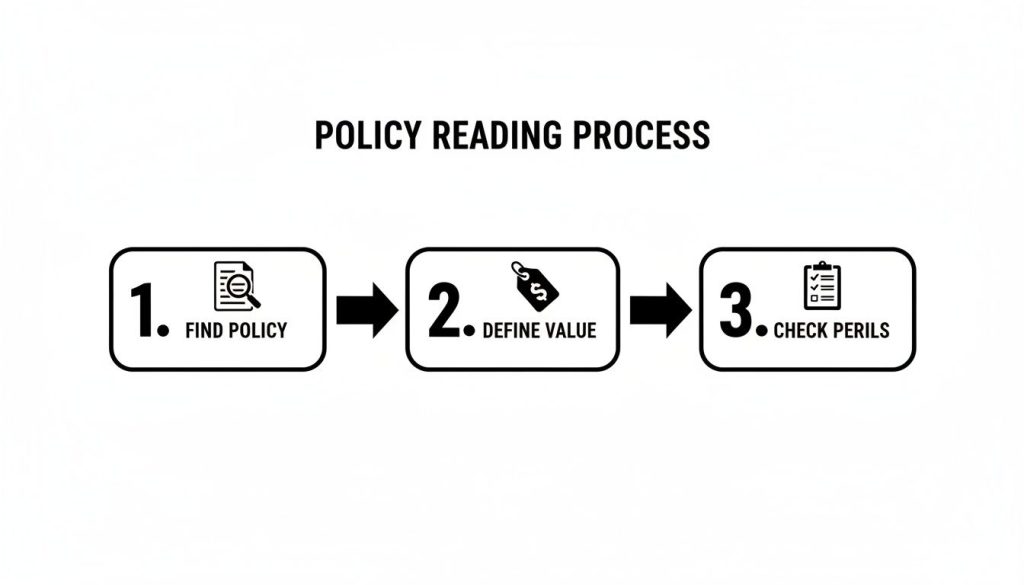
This process highlights the three key things you need to do: get your hands on the policy, figure out if you have RCV or ACV coverage, and confirm which "perils" are actually covered.
Step 1: Immediately Stop the Bleeding (Mitigate Damage)
Before you even think about calling your insurance company, your first job—both legally and practically—is to prevent the problem from spiraling out of control. This is what the industry calls your duty to mitigate. Insurers expect you to act like any reasonable person would to protect your property from further harm.
If you don't, they have a legitimate reason to deny paying for any damage that happened after the initial leak.
- Temporary Fixes: This doesn't mean doing a full repair. It means putting a tarp over the damaged roof section, moving furniture and heirlooms out from under the leak, or setting out buckets to catch the water.
- Safety First: If water is getting anywhere near electrical outlets or fixtures, go straight to your breaker box and shut off the power to that part of the house.
Step 2: Document Everything Before Touching a Thing
Your smartphone is your best friend right now. Before anything is moved, cleaned, or repaired, you need to create a detailed visual record. This evidence is what will prove the extent of your loss and, just as importantly, link it directly to a covered event like a storm.
Crucial Tip: You need to document both the cause and the effect. Get clear photos of the damaged shingles or the hole in the roof from the outside (only if it's safe!), and then go inside and thoroughly document the water stains, saturated drywall, and ruined belongings. This creates a clear, compelling story for the adjuster.
Your documentation should include:
- Videos: A slow, narrated walk-through is incredibly powerful. You can capture the scope of the damage and even the sound of dripping water.
- Photos: Take wide shots to give context to the room, then zoom in for close-ups of specific damage like buckled floorboards or peeling paint.
- A Detailed Log: Grab a notebook and start a journal. Write down the date and time you found the leak, what the weather was like, and every single action you take from that moment on.
Step 3: Notify Your Insurance Company Promptly
Once the property is secure and you’ve documented the scene, it’s time to call your insurer. When you make that first report, choose your words carefully. Stick to the facts you know and have documented.
- What to Say: "I'm calling to report new property damage from the storm on [Date]. My roof is actively leaking, and I have water damage inside my home."
- What to Avoid: Do not guess or speculate about the cause. Saying things like, "My roof has looked old for a while," or "I think it might be wear and tear" can be used against you to justify a denial.
This call officially starts the claims process and you'll be assigned a claim number and an adjuster. At this stage, you will also likely need to prepare a formal Sworn Statement in Proof of Loss. This is a signed, legal declaration of the facts and finances of your claim, and getting it right is non-negotiable.
To learn more, you can explore the requirements for a Sworn Statement in Proof of Loss in our guide.
Why Insurers Deny or Underpay Roof Leak Claims
After a storm damages your roof, you’d hope your insurance company would step up and be a true partner in your recovery. While many adjusters handle claims professionally, it's critical to remember that insurance is a business. At the end of the day, their primary responsibility is to their shareholders, which often means paying out as little as possible on claims.
Understanding the common reasons and tactics insurers use to deny or short-change a claim is your best defense. When you know what arguments to expect, you can build a rock-solid case from the very beginning.
Common Excuses for Denying a Claim
Insurance companies have a well-worn playbook for denying roof leak claims, especially in the chaotic aftermath of a major storm. The core strategy is often the same: shift the blame from a covered event, like a hurricane, back onto you, the homeowner.
Here are a few of the most frequent arguments you might hear:
- Pre-Existing Damage: The adjuster walks your roof and points to a few old, weathered shingles. Their argument? Your roof was already in bad shape before the storm, so the leak was bound to happen anyway. They'll try to frame the wind and rain as a minor factor rather than the direct cause.
- Faulty Installation or Workmanship: This is a classic move. The insurer might claim that the company who installed your roof a decade ago did a shoddy job. By blaming poor workmanship, they sidestep their responsibility, suggesting the roofer—not your policy—should cover the damage.
- Lack of Maintenance: If they find clogged gutters or see that you haven't addressed a minor, unrelated issue, they'll pounce. They will argue that your failure to perform routine upkeep is the real reason your roof failed, not the 100 mph winds.
The Red Flag: A denial letter isn't the final word; it's just the opening move in a negotiation. Insurers are banking on you giving up after the initial "no." It's your right to challenge their findings with your own evidence.
This is where your documentation becomes invaluable. Before-and-after photos, records of regular maintenance, and a report from an independent roofer can completely dismantle these common excuses.
Sneaky Ways Insurers Underpay Your Claim
Sometimes, an insurer won’t issue a flat-out denial. Instead, they’ll approve the claim but make a settlement offer so low it doesn’t come close to covering the actual repair costs. An underpayment can be just as devastating as a denial.
One of the biggest culprits behind underpayment is the Actual Cash Value (ACV) policy. Some carriers push these policies hard because they allow for massive deductions based on your roof's age and wear-and-tear (depreciation). This practice is widespread, and its impact is staggering.
Water and roof damage claims are a major financial pain point for homeowners. The data below shows just how common and costly these issues can be, which is why insurers look for every opportunity to reduce their payouts.
Key Statistics on Water and Roof Damage Claims
This table highlights the frequency and financial impact of water-related property damage claims for homeowners.
| Statistic | Figure | Source Insight |
|---|---|---|
| Homes Filing Water Damage Claims Annually | 1 in 60 | This shows how common these incidents are, making them a significant area of focus for insurer cost-cutting. |
| Average Claim for Water Damage | $12,514 | A substantial cost that insurers aim to minimize through depreciation and other tactics. |
| Potential Roof Depreciation | 50% or more | A 15-year-old roof needing a $15,000 replacement could be depreciated to a payout of only $6,000 to $8,000. |
Sources: This Old House and industry reports.
These numbers reveal the financial stakes. A lowball offer based on depreciation can leave a homeowner thousands of dollars short, turning a covered repair into a major out-of-pocket expense.
Beyond depreciation, keep an eye out for these other underpayment games:
- The "Patch Job" Offer: Your trusted roofer tells you the whole roof needs replacing to maintain its integrity. The insurer, however, only agrees to pay for a small patch, leaving you with mismatched shingles and a ticking time bomb for the next leak.
- Ignoring Local Building Codes: Many local ordinances require you to bring the entire roof plane up to current code if more than 25% is damaged. An insurer might conveniently ignore this rule and only offer to pay for the damaged spot, sticking you with the bill for mandatory, expensive upgrades.
- Using Unrealistic Pricing: The estimate you get from the insurance company might be built on outdated material costs or labor rates so low that no reputable local contractor would even consider the job. This creates a huge gap between their offer and the real-world bids you receive.
Recognizing these tactics is the first step toward fighting back. The best thing you can do is get multiple, detailed estimates from licensed local roofers to establish the true cost of getting the job done right. This independent proof is your most powerful weapon for challenging an unfair settlement and demanding the full amount you're owed.
What to Do When Your Roof Leak Claim Is Denied
That denial letter from your insurance company can feel like a punch to the gut. It’s easy to read it and think, "Well, that's that." But I'm here to tell you that a denial is rarely the final word on the matter.
Think of it as the insurance company's opening bid in a negotiation. They are banking on the hope that you'll feel overwhelmed, frustrated, and simply walk away. Don't fall for it. If your claim was denied after a major hurricane or the settlement they offered wouldn't even cover the materials for a repair, it’s a clear signal that you need to stand your ground.

When to Seek Professional Help
So, how do you know when it’s time to stop arguing with the adjuster and bring in a professional? There are some classic red flags that tell you it’s time to escalate. You should seriously consider getting expert help if:
- The insurer claims "wear and tear" without even doing a proper inspection, using it as a convenient catch-all to deny what was obviously storm damage.
- The settlement offer is a joke. You've gotten estimates from real contractors, and the insurer's offer won't cover even half the cost of the work.
- Your claim gets shut down right after a hurricane, even when you have clear proof the storm is what caused your roof to leak.
- They’re just dragging their feet. The insurance company has been stalling for months, leaving you with a leaky roof and no end in sight.
These aren't just frustrating delays; they're common tactics used to wear you down until you give up or accept a lowball offer. This is precisely the moment you need to level the playing field.
A denial letter isn't a dead end; it's a crossroads. Your next move determines whether you accept an unfair loss or fight for the full compensation needed to properly repair your home and protect your investment.
How an Attorney Can Challenge the Denial
When you hit one of these roadblocks, bringing in an experienced property damage attorney changes the entire game. A public adjuster can be great for assessing damage, but an attorney has the legal leverage to force the insurance company’s hand. It’s important to understand the difference between a public adjuster and a lawyer when you’re in this situation.
A good lawyer will dissect your policy, scrutinize the adjuster's report, and pick apart the denial letter to find the weak spots in their argument. They can reopen the claim, bring in their own network of engineers and roofing experts to provide compelling counter-evidence, and negotiate from a position of authority.
And if the insurance company still won't budge? Your attorney can file a lawsuit and hold them accountable in court for the policy you paid for. This is how you turn a frustrating dead end into a resolved claim and get the money you need to make your home whole again.
Answering Your Top Questions About Roof Leak Claims
Even when you know the basics of what insurance does and doesn't cover, the reality of filing a claim is stressful. Specific questions always pop up, and getting the right answers can be the difference between a paid claim and a costly denial.
Let's walk through some of the most common questions we hear from homeowners navigating this process.
How Long Do I Have to File a Roof Leak Claim in Florida?
This is a tricky one because there are really two deadlines you need to know. First, your policy language almost always requires you to give "prompt notice" of any damage. That doesn't mean filing the full claim, but it does mean letting them know something happened—and "prompt" can mean just a few days.
Then there's the state law. In Florida, you generally have a longer window to officially file your claim. But don't let that fool you into waiting. If you delay, the insurance company can easily argue that the damage got worse on your watch, giving them a reason to deny part or all of your claim. The best move is always to report the leak the moment you discover it. You can gather the details later.
Will My Insurance Rates Go Up if I File a Claim?
It's a fair question and a common fear. Yes, filing a claim might cause your premium to increase at your next renewal. But you have to weigh that possibility against the reality you're facing right now: a definite, out-of-pocket roof repair bill that could easily cost $15,000 or more.
It’s also worth noting that claims related to a major weather event, like a hurricane that impacts a whole region, are less likely to trigger a big rate hike for you personally compared to an isolated incident. Don't let the fear of a potential rate increase stop you from using the very coverage you pay for to handle a major, necessary repair.
Expert Insight: The real issue isn't if your rates might go up. It's making sure you get a settlement that actually covers the full cost of the repairs. The worst-case scenario is getting stuck with an underpaid claim and a rate increase.
Does Insurance Cover Mold Damage From a Roof Leak?
This is a huge "it depends." Mold coverage is almost never a standalone benefit; it's tied directly to what caused the leak in the first place.
If the roof leak was from a covered event, like a storm, your policy probably has a small sub-limit for mold cleanup—often capped at just $10,000. But here's the catch: if the insurance company denies the original leak claim because they say it's from old age or poor maintenance, any mold that grew as a result will also be denied. No covered leak, no mold coverage.
Do I Have to Use My Insurer's Recommended Contractor?
Absolutely not. You have the right to choose your own licensed, insured contractor, and you should exercise it.
An insurer's "preferred vendor" might sound convenient, but their primary loyalty is often to the insurance company that sends them steady work, not to you. Their goal might be to do the job as cheaply as possible to please the insurer. Your best defense against a lowball offer is to get at least two independent estimates from trusted local roofers who can give you an honest assessment of the true scope and cost of the work.
If your insurance company has denied your roof leak claim or made an offer that won’t even begin to cover the repairs, don't try to fight them alone. The experienced insurance attorneys at Tarrash & Tarrash can review your case for free and help you fight for the full compensation you deserve. Contact us to schedule your consultation.